

When conflict escalates, people are often left with life-or-death decisions to make, and just minutes to make them. Should you leave or is it safer to stay? Where will you go and how will you even get there?
People are often forced to flee with just the clothes on their back, leaving their support systems, valuables, and livelihoods behind. These survivors now face a new raft of challenges in trying to live and rebuild.
This is the reality for millions of people in the Democratic Republic of the Congo (DRC), where one of the world’s deadliest and most complex humanitarian crises has been unfolding for decades. The crisis has been driven by overlapping factors, including conflict, disease outbreaks, and natural disasters.
Following an escalation in violence in 2025, an estimated 14.9 million people will need humanitarian assistance this year, according to the UN’s Office for the Coordination of Humanitarian Affairs (OCHA).
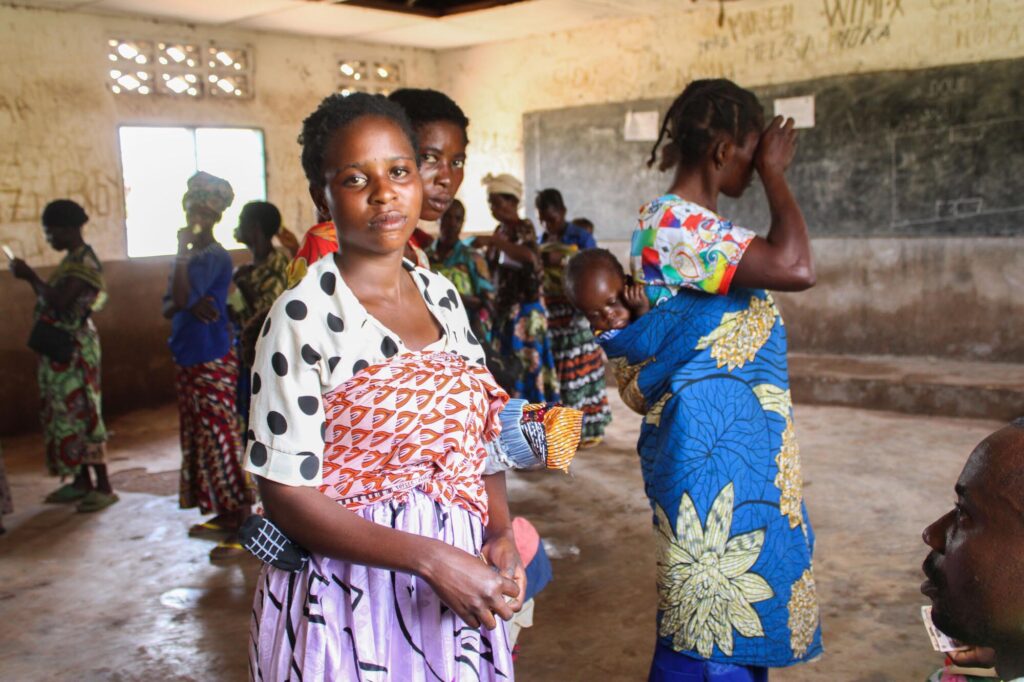
One of the people affected by the crisis is Nyota Mwenge (22), whose life was turned upside down when she had to flee her home last year when fighting reached her village.
Nyota was pregnant with her third child and had to walk for days to safety, alongside her husband and their two young children.
She said of the journey: “When the conflict started in our area, my husband and I decided to flee with our two children. What was most difficult was that we were among the last people to leave the village.
“We walked for four days because I was pregnant and we moved slowly. Whenever we got tired, we stopped to rest before continuing the journey.”
The family was offered temporary shelter on the floor of a woman’s house. Having brought almost no belongings with them during their escape, Nyota and her husband had to start from scratch to provide for their family.
“As we had brought nothing with us, we started working in people’s fields to earn a little income and try to rebuild our lives.”
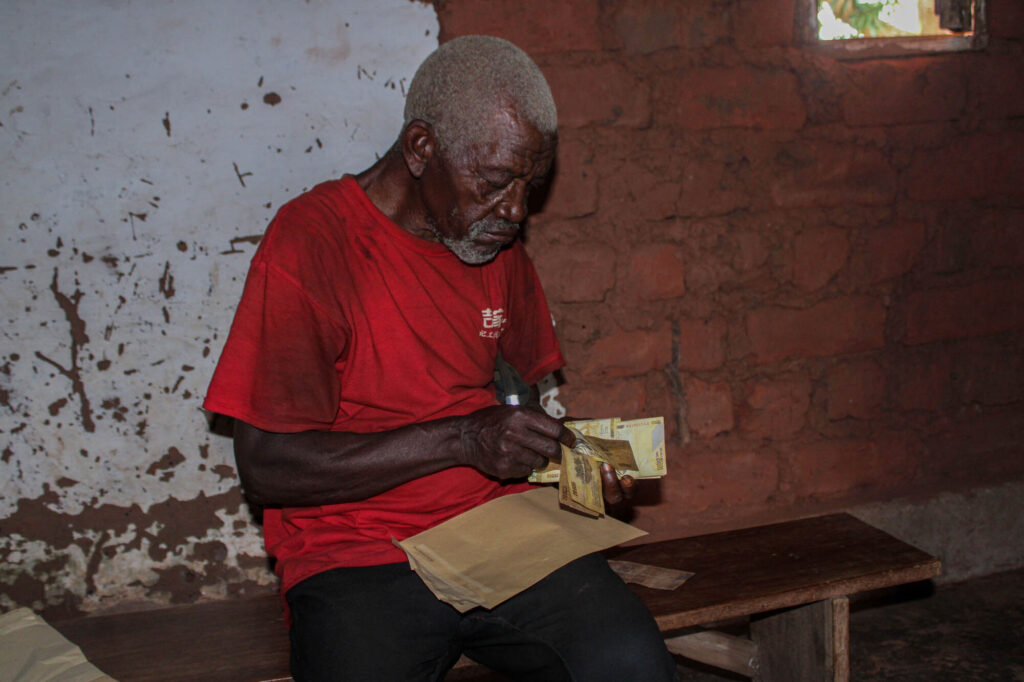
This scenario is familiar to Gulamu Ndaldi (70), who has been displaced more than once since 2016.
The father-of-seven told us: “I fled in 2016. I was living in a village that no longer exists because of the conflict. When I returned, I found my house completely destroyed. That is why I came back here and asked the village chief to help me find a place to stay. He gave me a piece of land where I could settle with my family.”
Gulamo worked as a teacher for years but suffered another blow when his eyesight started failing in 2020, eventually robbing him of his career.
The SAFER programme
Nyota and Gulamo are among the 4.9 million people that have been supported through the Strategic Assistance for Emergency Response (SAFER) programme – which is supported with humanitarian aid from the European Union and the UK Government and received funding from the US Government.
The SAFER programme, established in November 2019, is a consortium of five international NGOs, bringing together Alliance2015 members Concern Worldwide and ACTED, Mercy Corps, Norwegian Refugee Council and Solidarités International to provide an effective and coordinated rapid response mechanism in eastern DRC.
One component of SAFER is providing unconditional cash support to internally displaced people, returnees and host communities who are in crisis. Cash assistance is an effective method of support as it gives families the ability to meet their most urgent needs, if a functioning market is within reach.
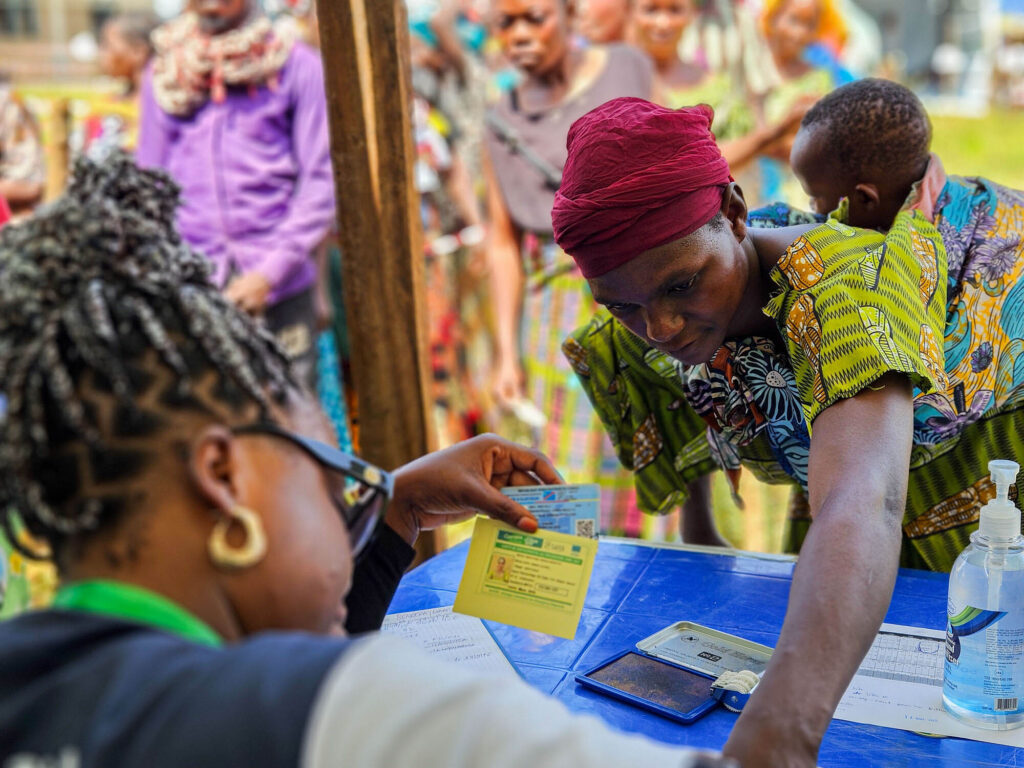
In total, 156,143 people received cash support under SAFER in 2025.
Gulamu says that receiving 325,000 Congolese francs (€118.88) cash support in March provided some relief for his family.
He said: “This assistance has come at the right time. My wife has been ill since March 2025, and I am the one taking care of our life now: household chores, caring for her, and providing food for the family.
“I know our problems will not be solved immediately, but this support will at least allow me to rest for a few days.”
“My absolute priority is to pay for my wife’s medical treatment. With the remaining money, I will buy a mattress, some kitchen utensils, and a few clothes for myself.”
Nyota also received cash assistance under SAFER and said it has helped her to buy essentials for her family.
She said: “With this assistance, I plan to go to the market to buy some kitchen utensils and dishes for the house.”
By Kathy Armstrong, Concern Worldwide
