
Preparing for the Next Blackout
“We had electricity for only five to seven hours a day. That simply wasn’t enough to keep a building like ours warm. It was an enormous challenge for the city’s entire housing sector.”
— Zinaida Maniuta, Head of the Kolos Homeowner Association, Mykolaiv
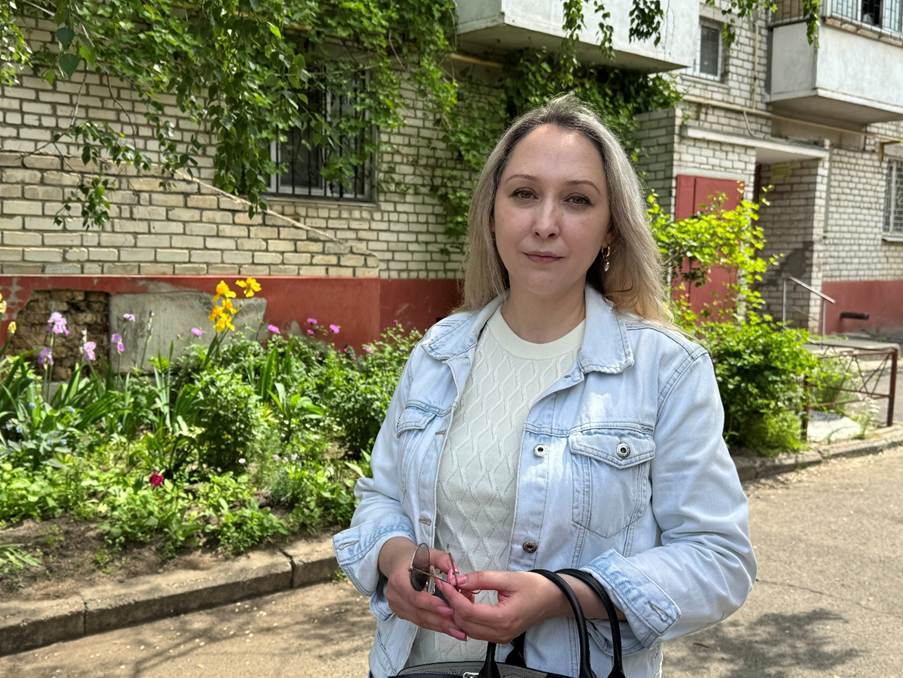
Most people stop thinking about winter when summer arrives. Communities across Ukraine communities don’t have that luxury.
During January and February 2026, temperatures regularly fell below -20°C. At the same time, repeated Russian missile and drone attacks on Ukraine’s energy infrastructure left millions of people without reliable electricity, heating and running water. At the peak of the winter, power outages lasted up to 16 hours a day, turning everyday life into a daily struggle.
For residents of multi-storey apartment buildings, a blackout meant far more than darkness. Without electricity, pumps supplying water and heating stopped working, lifts became unusable, intercoms and security systems failed, and hundreds of people suddenly lost access to essential services.
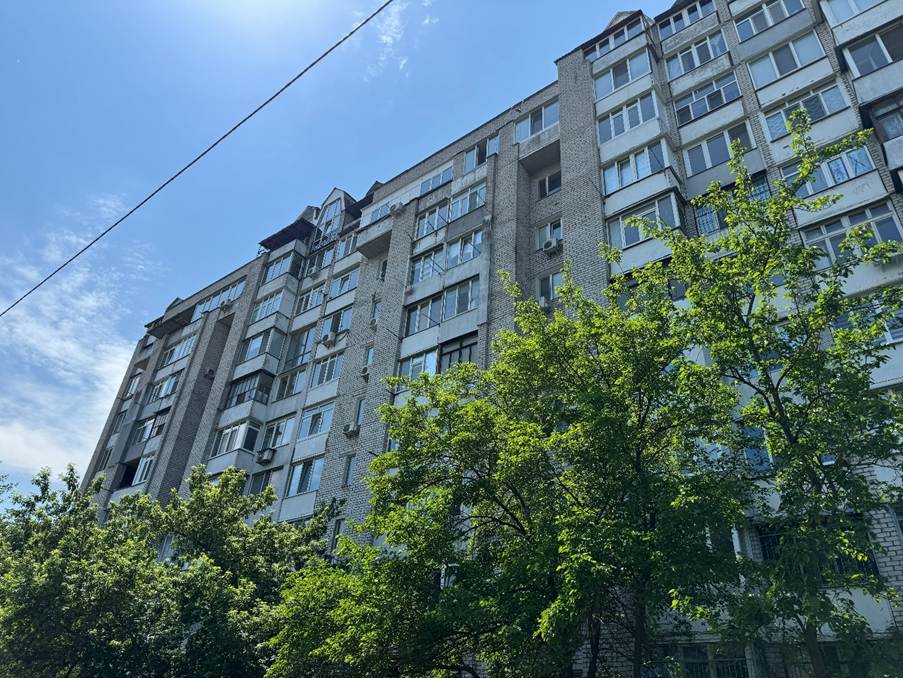
One of those buildings is Kolos (Ear of Corn), a homeowner association in Mykolaiv led by Zinaida Maniuta. The building is home to 108 apartments and around 350 residents – a tremendous responsibility.
“The biggest problem for our building is that when there’s no electricity, there’s no water. Above the fourth floor, the water simply doesn’t reach people’s apartments,” says resident Anton Yakovliev.
Like many homeowner associations, Kolos knew exactly what the building needed. The only thing standing in the way was funding.
“Securing an alternative power source became our number one priority,” says Maniuta. “Fortunately, we had the opportunity to participate in JERU’s programme. We prepared the required documents, submitted our application and received the support. We’re incredibly grateful. The whole process was simple, well organised and remarkably fast.”
The Joint Emergency Response in Ukraine (JERU) – a collaboration between Welthungerhilfe and Concern Worldwide – together with its local partner, Peaceful Heaven of Kharkiv Charitable Foundation, launched a pilot initiative supporting homeowner associations in Mykolaiv and Kherson. Through the Group Cash Transfer (GCT) modality, which provides grants directly to community-led initiatives, 31 homeowner associations invested in backup energy solutions selected by the residents themselves, including inverters, battery storage systems, voltage stabilisers, automation kits and the necessary installation works.
One Decision. Hundreds of People.
The strength of this approach lies in its multiplier effect. Supporting a homeowner association means supporting an entire residential building. One collective decision benefits not just one family, but hundreds of neighbours who rely on the same shared infrastructure.
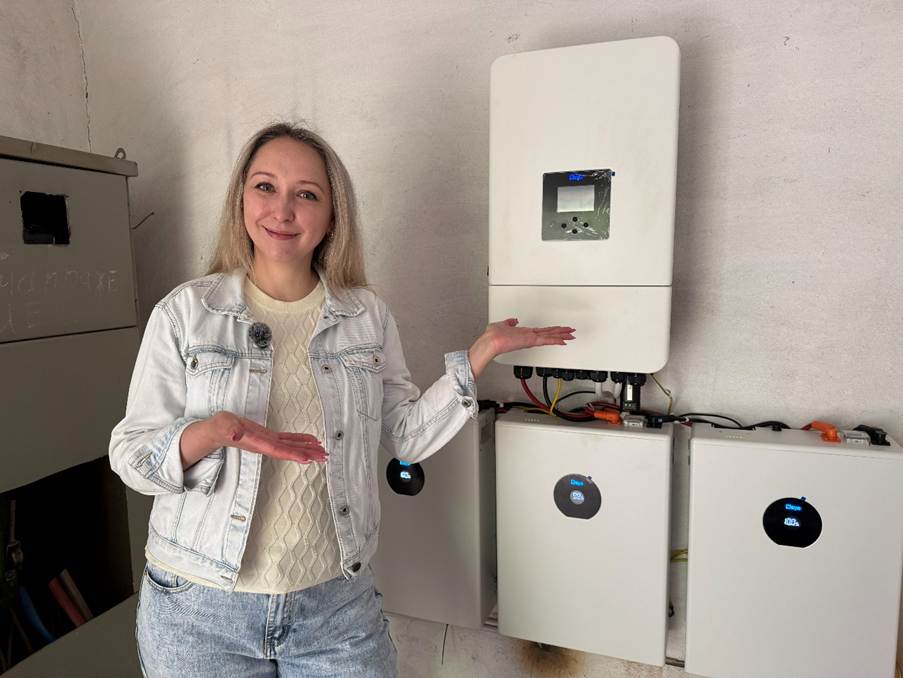
Thanks to the grant, Kolos installed an inverter and battery storage system capable of keeping the building’s critical infrastructure running during prolonged power outages.
For resident Anton Yakovliev, the difference is obvious.
“Now we have running water throughout the building. The entrances are lit at night. The automatic gates work again, and the intercom systems are functioning in every entrance.”
A few kilometres away, another homeowner association was facing the same challenge. Vadym Yurchenko heads a 16-storey residential building with 85 apartments and around 160 residents.
“Our building is fully dependent on electricity, so the residents had an incredibly difficult winter,” he says.
He vividly remembers elderly people, walking sticks in hand, climbing down from the sixteenth floor simply to have a cup of hot tea at a café near the railway station. Indoor temperatures dropped to just 11-13°C, while the small diesel generator residents had purchased themselves could do little more than charge mobile phones.
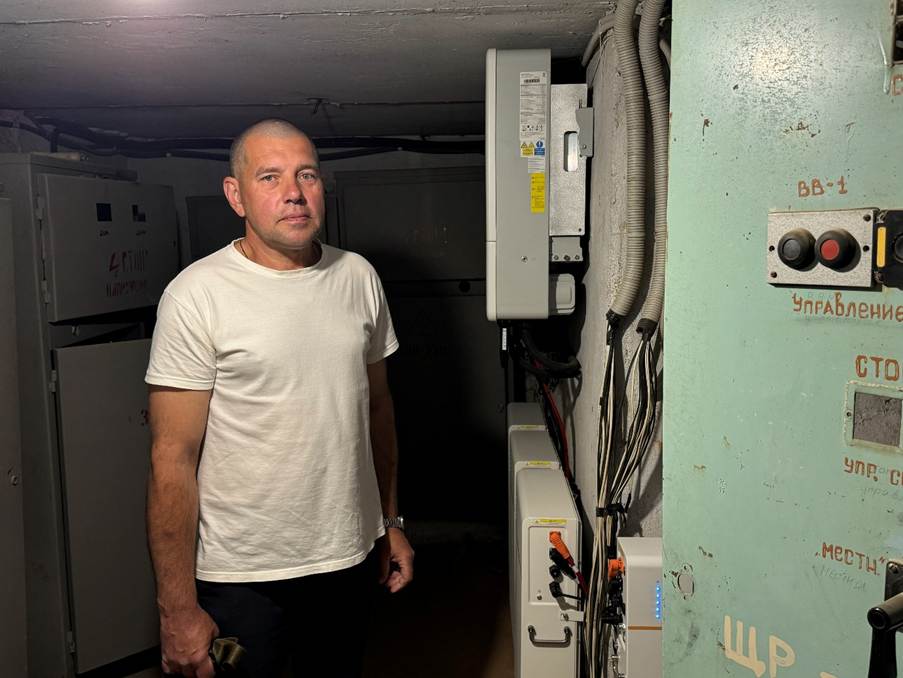
Having lived through such a winter, the residents, together with Vadym, made a clear decision: they would build their own autonomous heating point.
“We’re currently installing our own individual heating point in the basement, owned by the residents themselves. The inverter and battery system will provide electricity for it, allowing the system to continue operating during power outages.”
The biggest obstacle was affordability. A reliable backup energy system costing more than UAH 200,000 (around EUR 4,000) was simply beyond the reach of most residents – many of them older people or families with young children already struggling with the financial burden of war.
Thanks to the grant, only around two weeks passed between submitting the application and installing the equipment. The flexibility of the Group Cash Transfer approach enabled initiative groups to implement their own solutions quickly – before Ukraine faced another wave of power disruptions, this time driven by record summer heat and increased electricity demand.
More Than Electricity
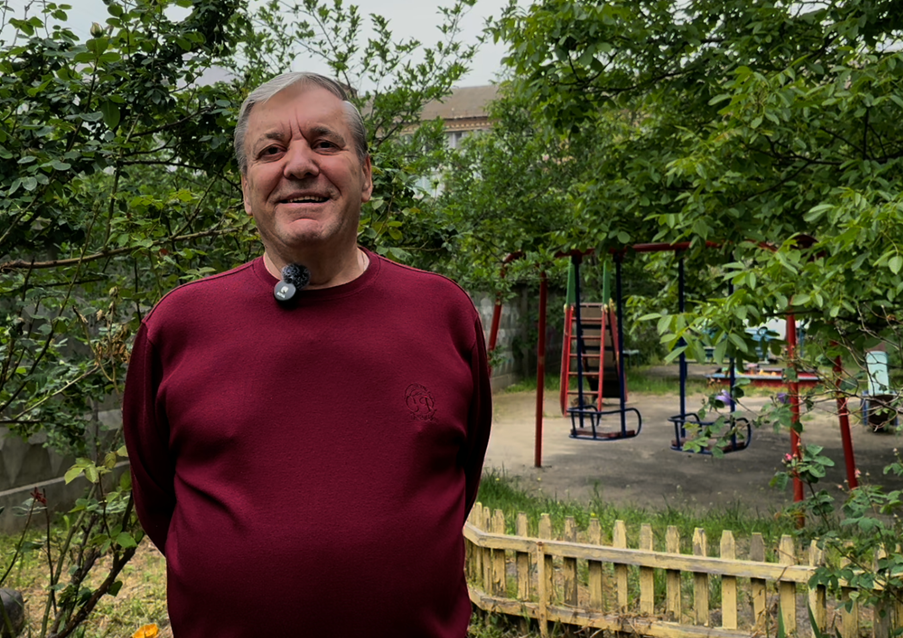
In total, the initiative supported 31 homeowner associations, reaching more than 3,500 apartments.
Yet the impact extended far beyond keeping the lights on. The support also brought significant psychological benefits.
According to participating homeowner associations:
- 92% reported lower levels of stress and anxiety among residents;
- 88% said residents felt safer during power outages.
Reliable access to water, heating and communication restored something that is difficult to measure, yet impossible to overestimate – a sense of security and confidence about the future.
As 75-year-old Kolos resident Anton Yakovliev puts it:
“It makes you want to live.”
________________________________________________________
Following the success of this pilot, a new activity, Winterization Group Cash Transfers, was included in Ukraine’s 2026–2027 Winter Response Plan by the Cash Working Group, a coordination platform that brings together humanitarian organizations, UN agencies, donors, and other key stakeholders to agree on common approaches to cash assistance across the humanitarian response. This opens the door for other humanitarian organizations to implement similar initiatives.
Oleksandra Titorova – JERU Communications Officer, July 2026
