
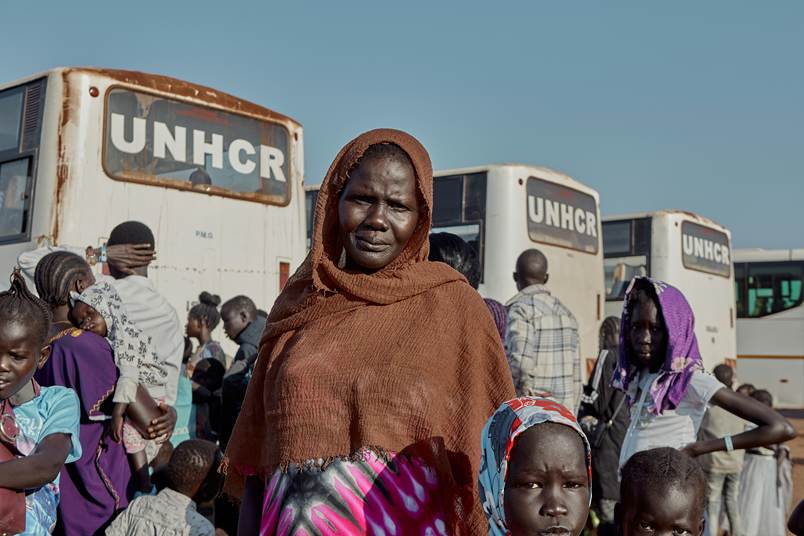
“Every
day we meet women and children who have lost everything. Their needs go beyond
food assistance: they are asking for protection, access to services, and
dignity.”
Emmanuel Okeng, CESVI Country Representative in Sudan, describes the situation
with professional clarity shaped by personal experience.
More than two and a half years after the outbreak of conflict between the Sudanese Armed Forces (SAF) and the Rapid Support Forces (RSF), Sudan remains trapped in a prolonged and multidimensional emergency. Over 30 million people are estimated to be in need of humanitarian assistance. 24 million are experiencing acute food insecurity, and nearly 10 million people have been forcibly displaced, many multiple times. Entire urban and rural systems have collapsed: hospitals are non-functional, schools closed, and basic public services severely disrupted.
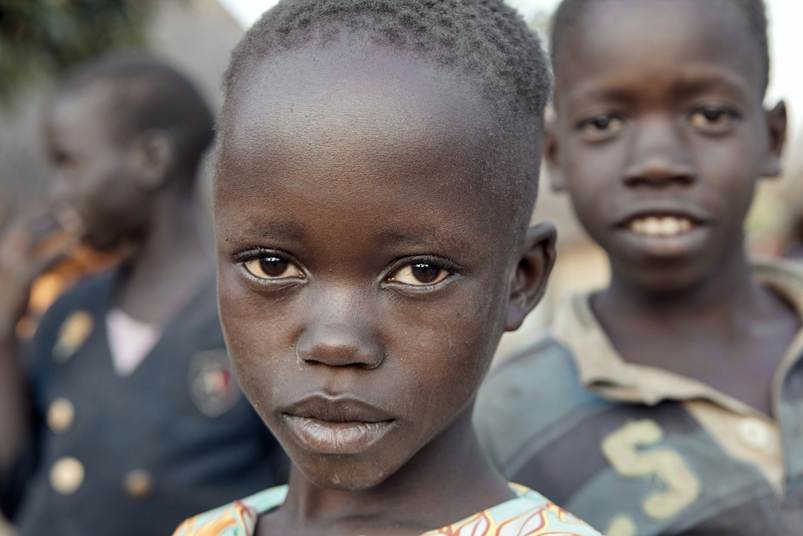
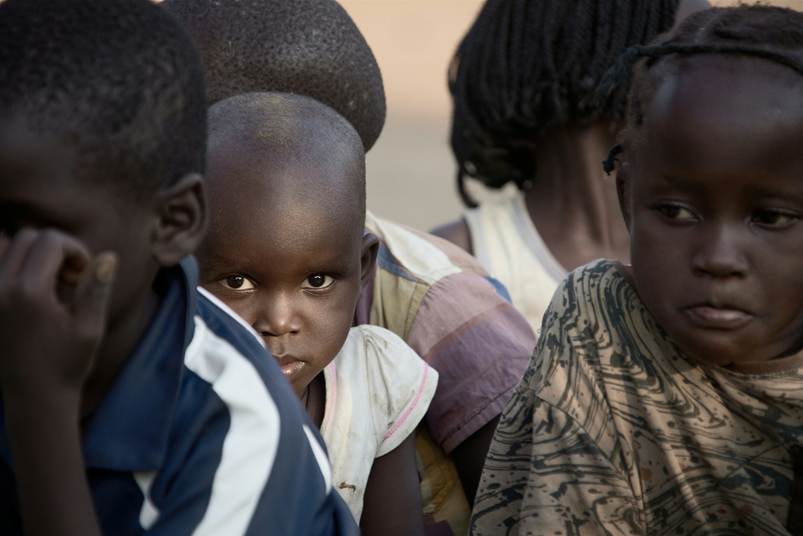
In displacement sites, living conditions are extremely precarious. Access to safe water is limited, food availability remains inconsistent, and a significant proportion of children have never accessed formal education. Conflict-related shocks are compounded by malnutrition, disease outbreaks, and climate-related disasters. An estimated 3.7 million women and children suffer from acute malnutrition, while 13 million children are currently out of school.
Protection risks are particularly severe. In Darfur, gender-based violence — including sexual violence — has escalated and is increasingly used as a tactic of war. Local protection actors report that many cases remain undocumented due to access constraints, stigma, and insecurity.
For affected households, coping mechanisms are rapidly eroding. Families sell remaining assets, reduce meal intake, and travel long distances to unsafe water sources. The collapse of the economy and soaring prices have made basic food commodities largely inaccessible. At the same time, international attention has shifted elsewhere, further exacerbating the risk of underfunding and neglect.
CESVI’s Re-engagement in Sudan
“We returned because the needs are overwhelming and the response gap is widening. Communities require immediate assistance, but also sustained presence,” Okeng explains.
CESVI, previously active in Sudan in the early 2000s, resumed operations in 2024 with a new intervention in Red Sea State, which hosts large numbers of internally displaced people. The programme aims to restore access to essential health and protection services while supporting community-based resilience mechanisms.
Key activities include:
- Re-establishing community protection networks to identify, prevent, and refer cases of abuse and exploitation;
- Creating safe spaces within health facilities, where trained psychologists and protection officers provide individual and group-based psychosocial support;
- Distributing dignity kits to women and adolescent girls. These kits include essential hygiene and personal care items — such as soap, toothpaste, toothbrushes, shampoo, hand sanitiser, sanitary pads, detergents, and water purification sachets — critical for health, dignity, and protection in displacement contexts.
CESVI has also supported the reopening of basic health points and child-friendly spaces. “When access to primary healthcare is restored, even at a minimal level, it has an immediate and measurable impact on community wellbeing,” Okeng notes.
Incremental Progress in a High-Risk Environment
In Sudan, progress is necessarily incremental. It may take the form of a survivor accessing support services for the first time, a child returning to structured play, or a household obtaining safe drinking water.
Despite prolonged exposure to violence and displacement, affected communities continue to demonstrate resilience and agency. Many displaced families express a clear priority: not to be forgotten by the international community.
Humanitarian access remains constrained in several areas, limiting the ability to reach all populations in need. Nevertheless, feedback from communities that can access CESVI-supported services highlights the importance of integrated responses that address health, protection, and basic needs simultaneously.
An Uncertain Outlook, an Ongoing Responsibility
“In Darfur, we are witnessing levels of violence that, in some areas, surpass those of 2003,” Okeng adds. “Each life protected or supported is a concrete countermeasure against systemic violence.”
Sudan’s future remains highly uncertain, shaped by ongoing conflict, extreme poverty, and weak governance. Addressing the crisis requires renewed international engagement: a credible ceasefire process, increased humanitarian funding, and stronger protection for civilians and humanitarian workers.
Despite the scale of the crisis, Sudan is not without prospects for recovery. Continued support to principled, field-based humanitarian action remains essential. Sustained engagement — rather than short-term emergency responses — will be critical to prevent further deterioration and to preserve the foundations for future recovery.
