

The training for youth developed practical skills in conflict resolution, time management, career planning, and effective self-presentation. Photo credit: Stanislav Pantelei / Joint Emergency Response in Ukraine.
Jobs are scarce, the front line is fluid, and each winter brings new worries about heating, electricity, and income – as Ukraine enters the fifth year of the full-scale invasion, life in many communities across this war-torn country remains uncertain.
In small towns and villages, opportunities for young people were limited even before the war. Now, with businesses struggling and many families under financial pressure, starting a career can feel almost impossible.
Lypova Dolyna – a settlement whose name translates as “Linden Valley” – has a population of over 4,000 people. It can be described as relatively calm for a community in the border region of Sumy. Relatively, because kamikaze drones and missiles pass overhead with disturbing frequency.
Since the start of the full-scale war, many young people have left the area or gone abroad, while local entrepreneurs constantly struggle with staff shortages and face the risk of closure. Job opportunities are shrinking as businesses shut down due to problems with electricity and heating.
To address this, the Joint Emergency Response in Ukraine, a collaboration between Concern Worldwide and Welthungerhilfe, together with their local partner, HelpGroup launched a project funded by the German Government. It combines eight sessions of soft skills training and paid three-month internships to help young people gain confidence, practical experience, and a pathway to employment close to home.
Building confidence through a communication course
The training focused on practical skills employers value: conflict resolution, self-organization, career orientation, resume writing, time management, and effective self-presentation.
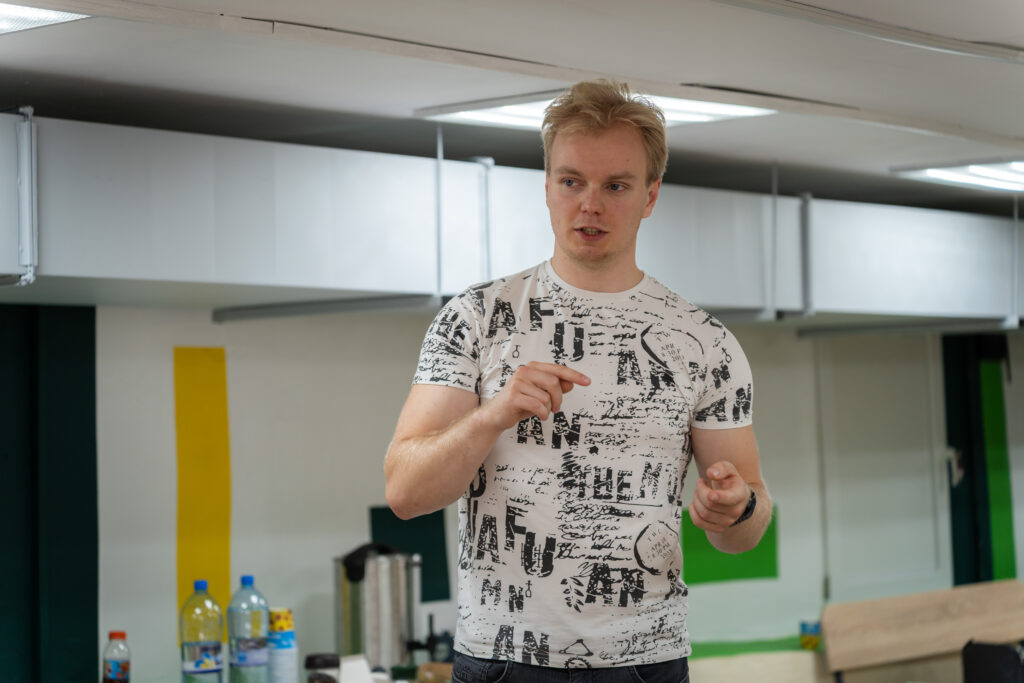
For 23-year-old Anatolii Yakovenko, who studied micro- and and nanosystems engineering and is currently employed as an Information Technology specialist at the local council, the sessions were a chance to strengthen practical skills and meet new people in his hometown.
“I came here to communicate and improve my skills a little,” he says. “You meet people you would not normally meet at work.”
He believes such opportunities give local youth a reason to stay.
“We need something that keeps people interested – jobs, projects, ideas. Then they will stay and build their future here.”
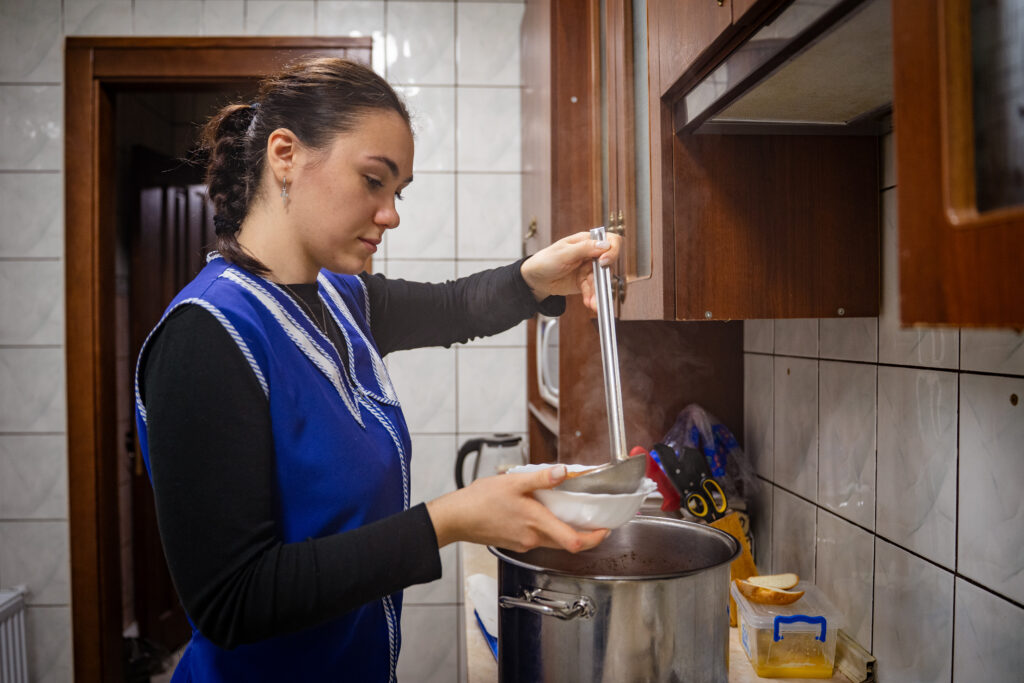
23-year-old Anastasiia Stohniienko joined the Soft Skills course simply out of curiosity. After studying hospitality management in Kyiv, she returned to Lypova Dolyna, her hometown, when the pandemic and the war disrupted her plans.
“I didn’t really understand what soft skills were,” she says. “That’s why I was curious to learn more.”
The training helped her become more confident and open.
“I started talking to people more, getting to know them. The fear that others might judge me disappeared. Now I feel more confident.”
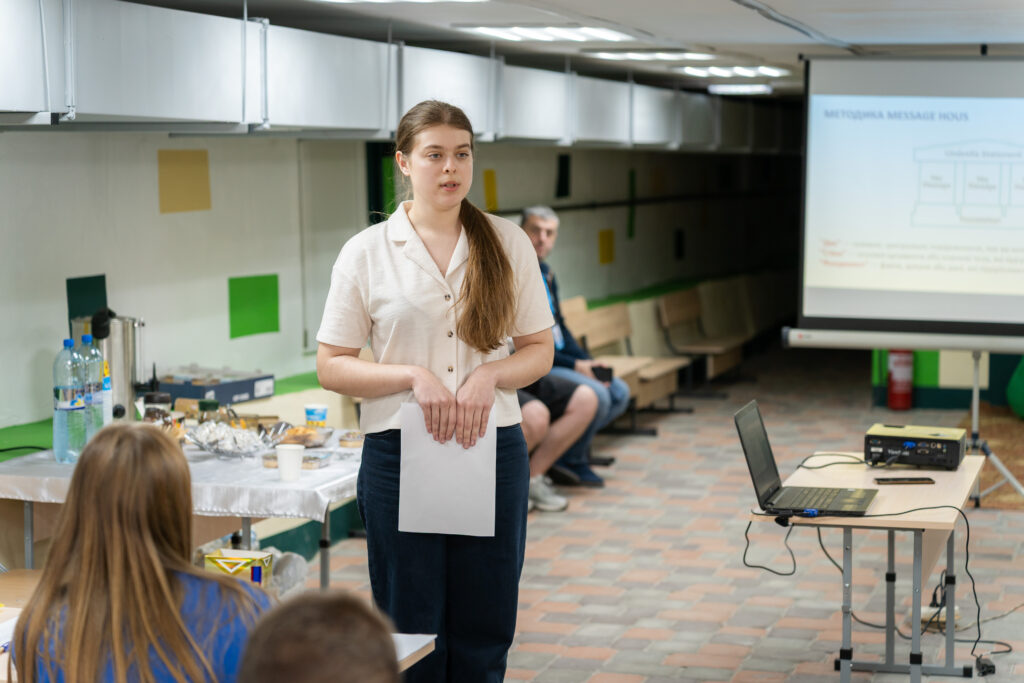
For 24-year-old Alina Yemets, who studied law, this project was a chance for her to try something new.
“I had never attended such trainings before, so I was keen to see what it was about. We had many interactive tasks and practical exercises. It was not just theory.”
She especially remembers the sessions on time management and prioritization.
“These are things I plan to use in the future. It helps to understand what is important and what can wait.”
Internships that benefit both youth and businesses
After completing the course, participants who were interested had the opportunity to pursue an internship at local businesses. For many, this was their first real step into the labour market.
Anastasiia and Alina joined Alliance, a local agricultural company. Anastasiia worked in the kitchen, while Alina gained her first professional experience in the legal department. After completing their internships, both were offered jobs – even though employment was not guaranteed.
“I thought I would just finish the internship and that would be it,” Anastasiia says. “So it was a very pleasant surprise when they offered me a job.”
Alina now works with contracts and documents.
“I’m grateful they accepted me into the team after the internship. I want to keep learning and developing.”
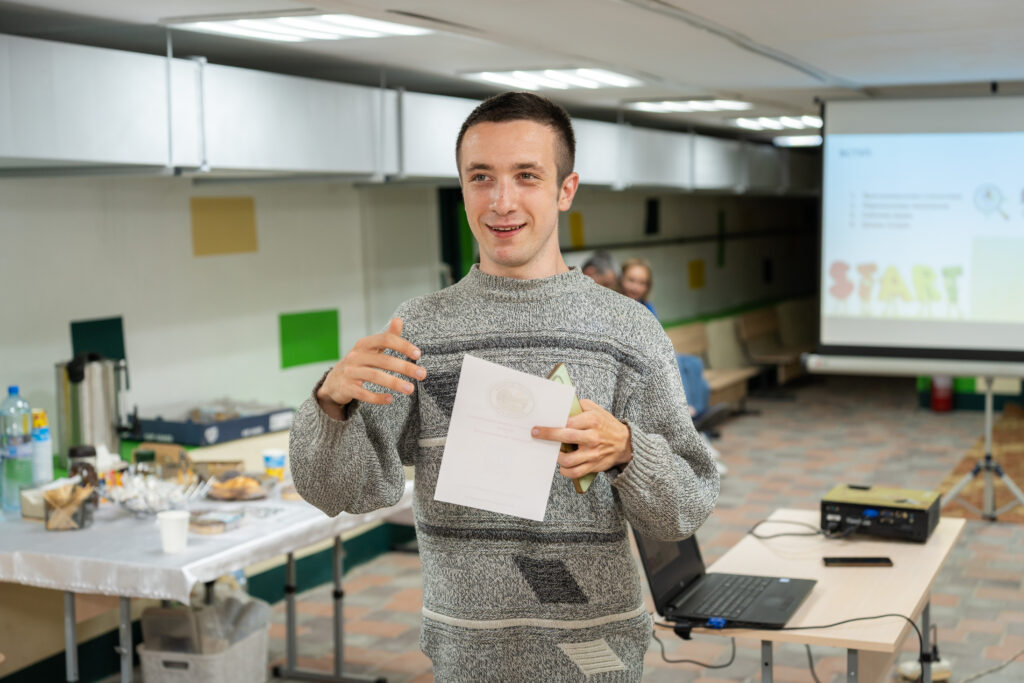
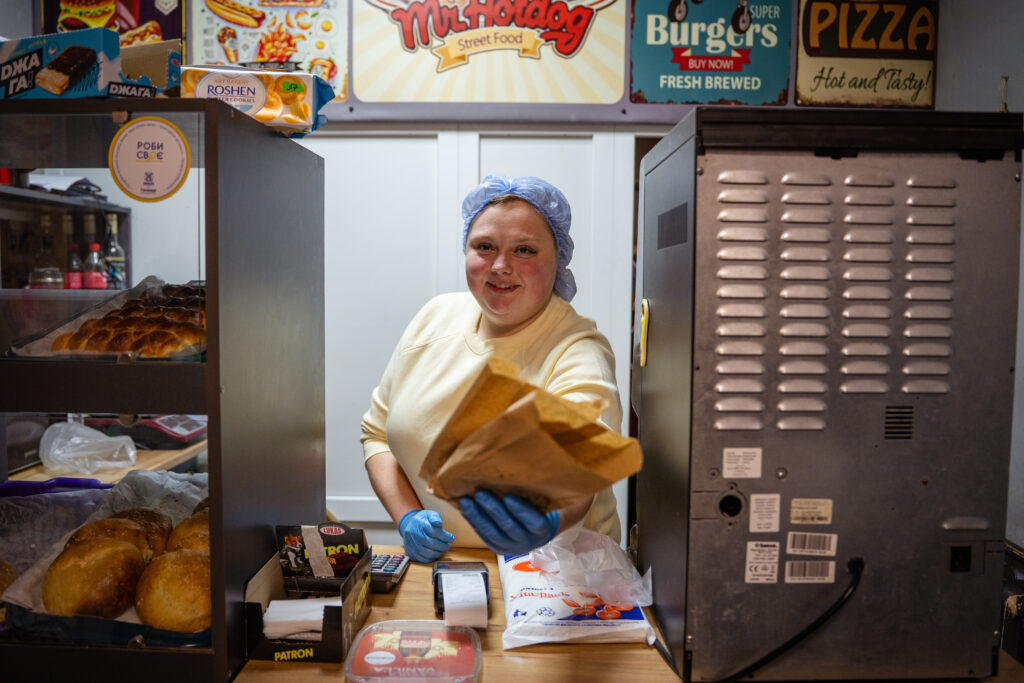
Another participant, 23-year-old Yaroslav Kuripiatnyk, completed a three-month internship as a social media assistant at a local bakery. During the placement, he helped create the bakery’s Instagram page, designed price tags, and developed a new logo.
It was also a major boost for the business owner, Viktoriia Oliinyk, who had previously received a grant to launch a line of ready-to-cook frozen food in her bakery. The project benefited not only young people but local entrepreneurs as well.
Earning experience and self-confidence
Through internships and a communication course, young people got real work experience. This experience was not only about gaining practical skills. For Yaroslav, as a person with a disability, taking part in this project was crucial in building his confidence and a sense of being just like everyone else.
During the training, he launched the “Good Deeds for Lypova Dolyna” channel to share ideas on how to be helpful to the community, show how others can contribute, and highlight practical ways people can support one another using their unique talents and skills.
“I realized that my communication skills are stronger than I thought. The training gave me the confidence to use them for real good deeds. If enough people join, we will turn this into a full-fledged community organization.”
Yaroslav plans to use the money he earned during the internship to buy equipment that will help keep his home powered during outages – like many families in the region, his household faces constant worries about electricity during the harsh winter months.
With temperatures falling to -28°C in January and energy infrastructure under daily attacks by Russian drones and missiles, such decisions reflect the harsh reality many families face. For just starting their careers, stable employment can make a crucial difference – especially during winter.
Opportunities that keep young people at home
For many participants, this project offered more than skills or short-term income. It gave them direction, confidence, and a reason to stay in their communities.
“There are not many opportunities for young people here,” Anastasiia says. “Many leave. But this project helps people find work, and that’s very important now.”
Local employers also see the value. According to Alina’s supervisor, Yurii Pron, internships allow young specialists to become full team members while helping companies meet their staffing needs.
Four years after the full-scale invasion, recovery in border regions, such as Sumy, depends on people – especially young women and men who choose to stay, work, and build their future at home.
Project Overview & Impact
Project: Building Resilience of Conflict-Affected Communities in Ukraine – Support Basic Needs and Reduce Impact of Future Shocks
Funded by: Federal Ministry for Economic Cooperation and Development (BMZ)
Implemented by: the Joint Emergency Response in Ukraine (JERU) – a partnership between Welthungerhilfe and Concern Worldwide – and delivered in collaboration with the International Rescue Committee, People in Need, HelpGroup, Posmishka UA, and the Ukrainian Association of Business Support Centers.
Soft Skills Training for Youth: Conducted for 124 young people (18–25 years) from Sumy, Zaporizhzhia, and Mykolaiv regions.
Key Outcomes:
- 91% reported feeling more prepared to find a new job
- 86% gained new knowledge or skills
- 51% have already started applying these skills in practice
- 20% reported an increase in income
Author: Oleksandra Titorova, Communications Officer, Joint Emergency Response in Ukraine, Welthungerhilfe
