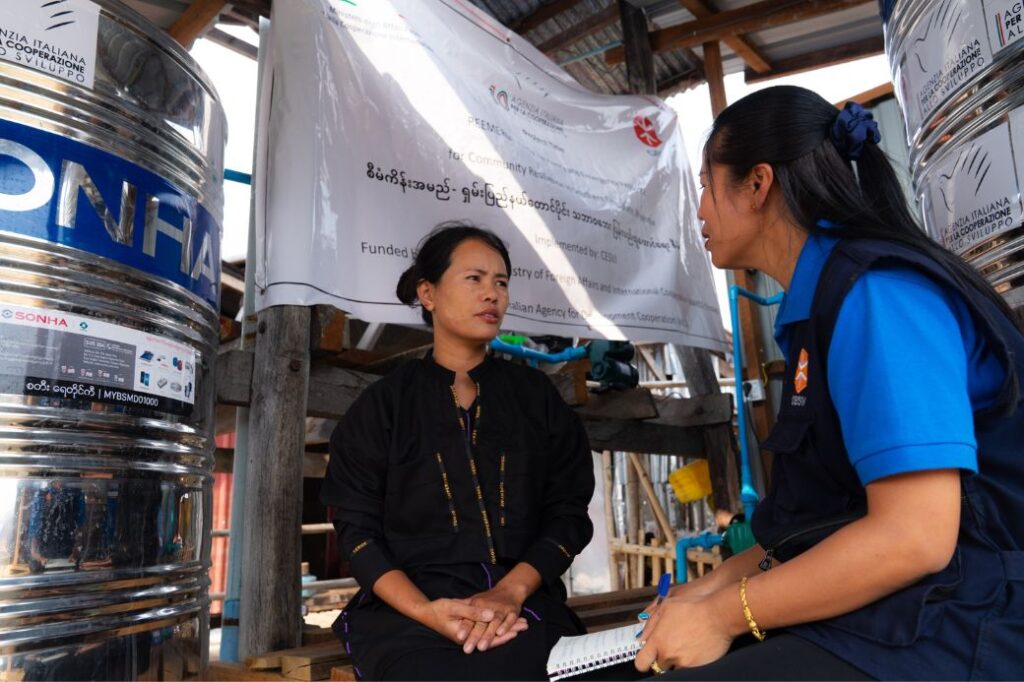

One year ago, Myanmar was struck by a 7.7 magnitude earthquake that brought the country to its knees, adding devastation to a land already battered by years of conflict and instability.
Alliance2015 member CESVI, already present in the country, responded from the very first hours following March 28, immediately activating its field teams to assess the damage and identify the most urgent needs. This presence made it possible to quickly turn analysis into action: within just a few days, a large-scale humanitarian response was launched, reaching the hardest-hit areas such as Southern Shan, Mandalay, and Sagaing.
In the early stages of the emergency, with the European Union’s support, CESVI distributed 104 tons of essential aid, including 1,000 family tents, 1,600 shelter kits, 1,600 waterproof tarpaulins, 1,600 kitchen sets, 1,000 solar lamps, 1,000 solar torches, and 96,000 water purification tablets, as well as 1,500 sacks of rice. This intervention ensured immediate assistance to over 15,000 people, providing shelter, safe water, and essential goods at a critical time.
Throughout 2026, it is estimated that 16.2 million people – about one in three in Myanmar – will need humanitarian assistance, including 8.4 million women and 5 million children. At the same time, 8.5 million people will face acute food insecurity.
The earthquake struck a country already exhausted by an unprecedented humanitarian crisis: over 3.6 million displaced people, one-third of them children, and more than half of the population exposed to ongoing conflict.
In this context, CESVI has remained on the front line, supporting communities from emergency response through to reconstruction.
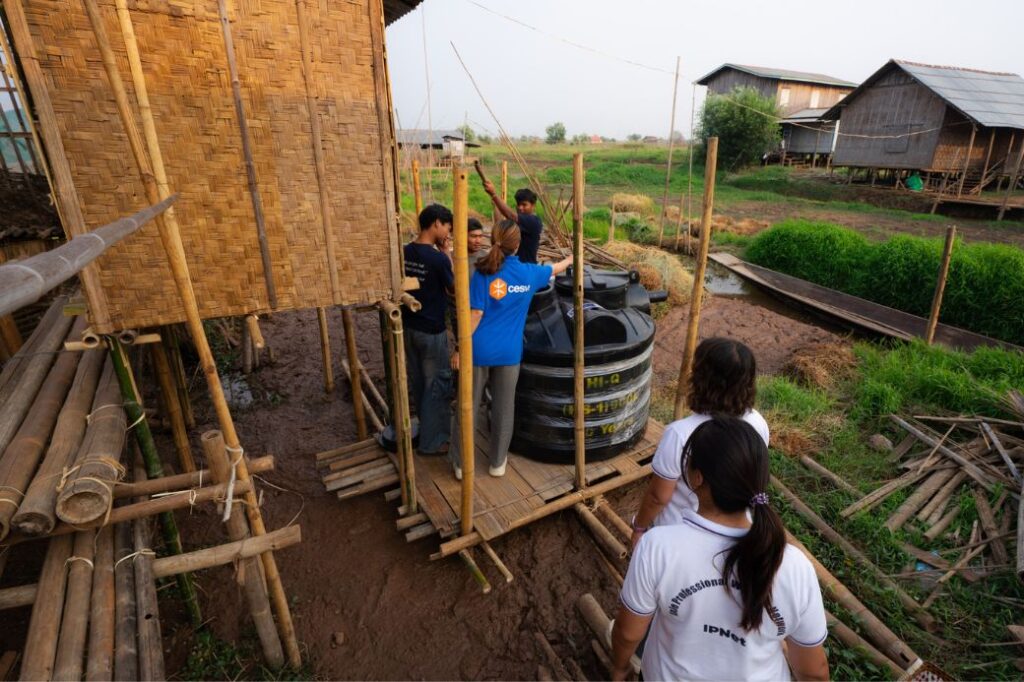
The impact of the earthquake in the heart of Shan State
The earthquake severely hit Shan State, particularly the Inle Lake area, devastating the floating gardens that provide livelihoods for over 9,500 families.
Approximately 71% of the local population saw their lives shattered: 1,300 homes destroyed, thousands displaced, and nearly half of the crops lost.
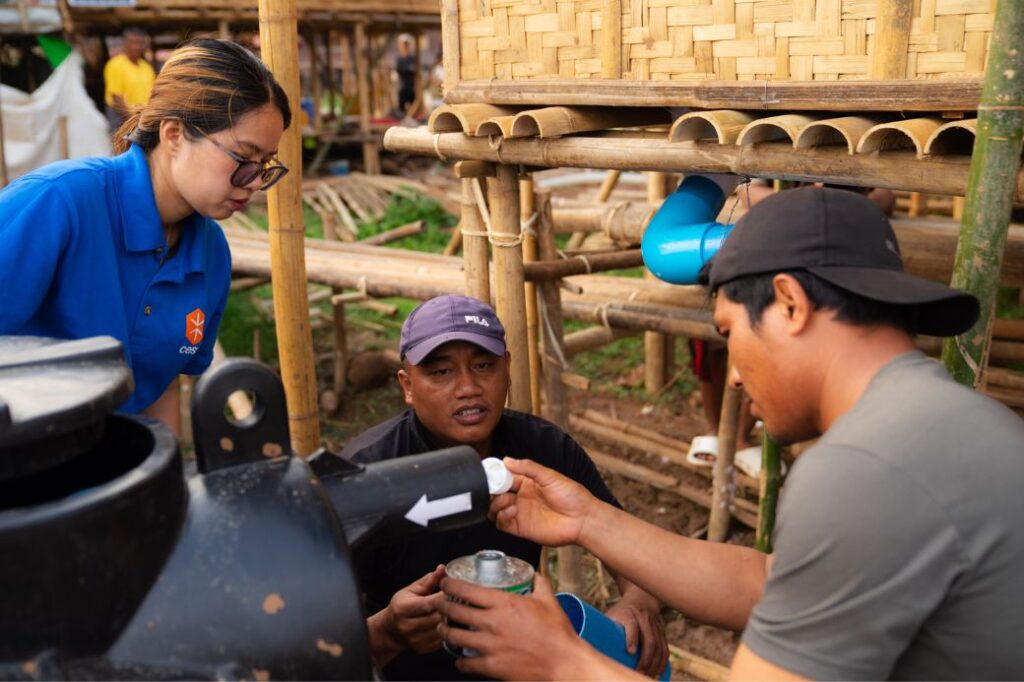
Shelter and clean water to restore dignified living conditions
Thanks to the project “Toward Tomorrow: Recovery in Nyaung Shwe”, supported by the European Union under the Nexus Response Mechanism (NRM)* program, CESVI has focused on sustainable and safe reconstruction. The intervention includes the rebuilding of 500 homes through a cash-based approach, enabling families to purchase materials locally and actively participate in reconstruction. The new structures are designed to be resilient to future shocks and floods.
At the same time, to ensure hygiene, 500 latrines with biotanks have been installed – innovative systems that decompose waste and prevent lake pollution – along with 5 solar-powered water purification systems.
The project also supports economic recovery through a set of integrated interventions. Cash assistance has been provided for the repair or replacement of boats and fishing equipment, as well as for the rehabilitation of floating gardens for 160 families. Farmers are learning Climate-Smart Agriculture techniques, using sustainable seeds and biopesticides to protect the lake’s fragile ecosystem. Through the Cash-for-Work system, community members have been directly involved in restoring floating platforms, combining immediate economic support with care for their environment.
Thanks to the intervention, 100 houses have already been rebuilt, restoring dignity to over 300 direct beneficiaries. However, the project continues to ensure that no one is left behind during this phase of reconstruction and recovery following the catastrophe.