
Surkhet, Nepal ,12 December 2025
“Progress in reducing hunger in Nepal has become stagnant since 2016 due to geopolitical uncertainty, declining international support as Nepal is graduating from “least developed country” (LDC) status, and persistent vulnerabilities in remote regions,” highlights Mr. Shakeb Nabi, Country Director of Welthungerhilfe (WHH) Nepal.
Credit: Welthungerhilfe (WHH)
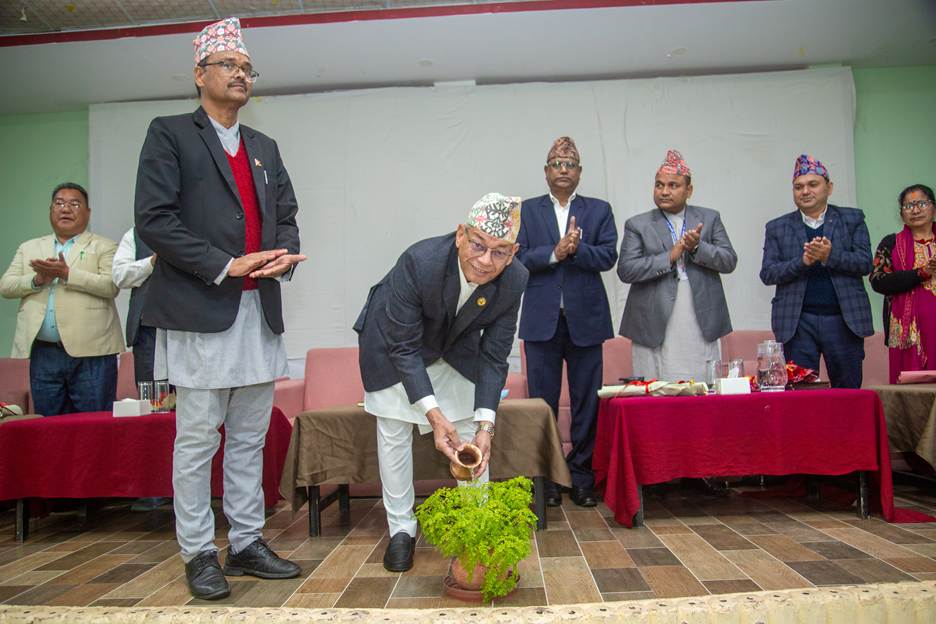
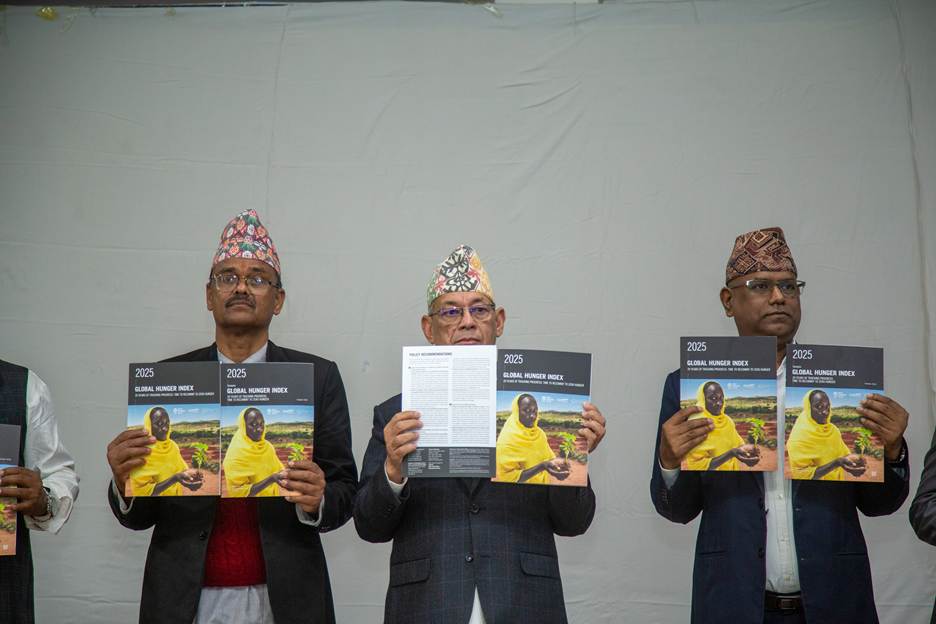
The Global Hunger Index (GHI) 2025 Report was officially launched on November 9, 2025, in Surkhet, the provincial capital of Karnali Province. Located in the mid-western part of Nepal, Surkhet serves as a major gateway to the remote mountain districts of the region and is known for its diverse terrain, cultural richness, and growing administrative significance.
The provincial setting and the country’s practice of federalism and decentralization of power to provincial and local governments provided a meaningful backdrop for the first-ever provincial-level dissemination of the report outside the Kathmandu Valley. The launch underlined the unique food and nutrition security challenges of Karnali and Sudurpashchim provinces, where food insecurity and gender disparities remain high, and several development indicators, including low Human Development Index (HDI) scores, lag behind the national average.
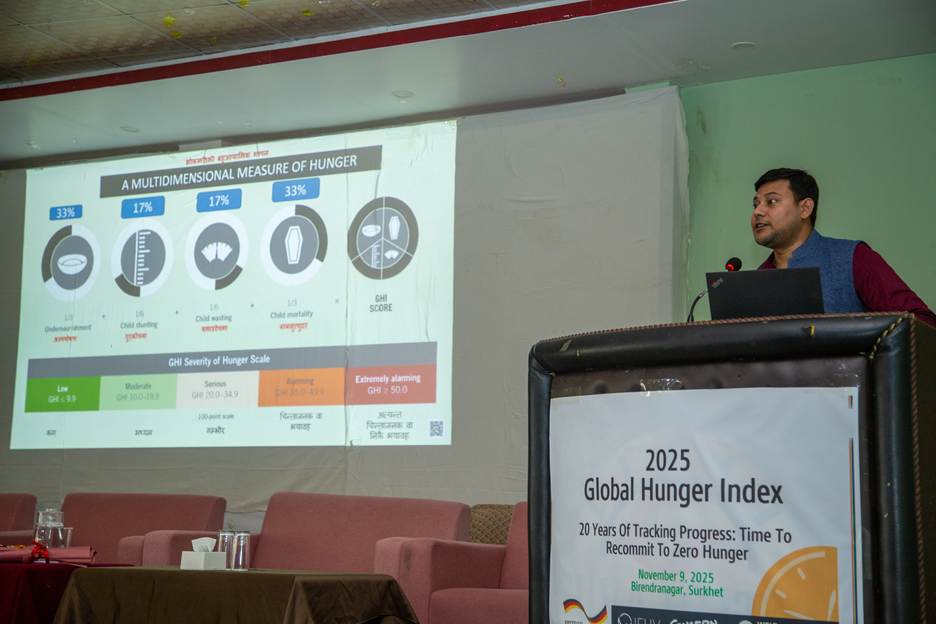
The GHI is a tool to measure and compare the severity of various hunger indicators, such as malnutrition and child mortality, with global, regional, and national figures. It is published annually by WHH and Alliance2015 partner Concern Worldwide, with the Institute for International Law of Peace and Armed Conflict (IFHV) joining as a partner since 2024.
The event, jointly organized by WHH Nepal and LI-BIRD, brought together senior government authorities, development partners, municipalities, and community representatives from Karnali and Sudurpaschim Provinces of Nepal. Building on the multi-stakeholder exchange, discussions centered on the key barriers to food and nutrition security and the actions required at provincial and local levels. Hon. Minister Binod Kumar Shah from the Ministry of Livestock, Agriculture, and Cooperatives (MoLMAC), Karnali Province, highlighted the weak implementation of policies, poor dietary habits, climate impacts, labor migration abroad, and limited agricultural investment, as major challenges that hinder food and nutrition security efforts. He stated, “Provincial and local governments must increase budget for agriculture, adopt private sector-friendly policies, innovation and nature-friendly practices, strengthen coordination, and promote high-value crops and organic farming.”
The session chair, Mr. Surya Nath Yogi, Vice Chairperson of the Karnali Province Planning Commission, informed that only 6% of Karnali’s cultivable land is used, underscoring the urgent need to maximize local production through coordinated action.
This year, Nepal’s GHI score stands at 14.8 (moderate hunger), showing significant improvement over the past two decades, as Nepal’s GHI score was 37 in 2000. However, it requires consolidated efforts from multiple stakeholders to achieve the constitutional right that guarantees every citizen the right to adequate, safe, and nutritious food, and ensures that people can produce, access, and control their own food systems with dignity.
The report launch also highlighted emerging nutrition and agriculture trends across the country.
Nutrition and Agriculture Trends
Mr. Vikash Deuja, Technical Expert in Nutrition at WHH Nepal, reported that stunting has increased in Nepal by 1.2% as compared to last year (2024), and is higher than the acceptable threshold of 20%. He added that 5.2% of the population lacks sufficient calorie intake. The geopolitical tensions and reliance on remittances further heighten households’ vulnerability.
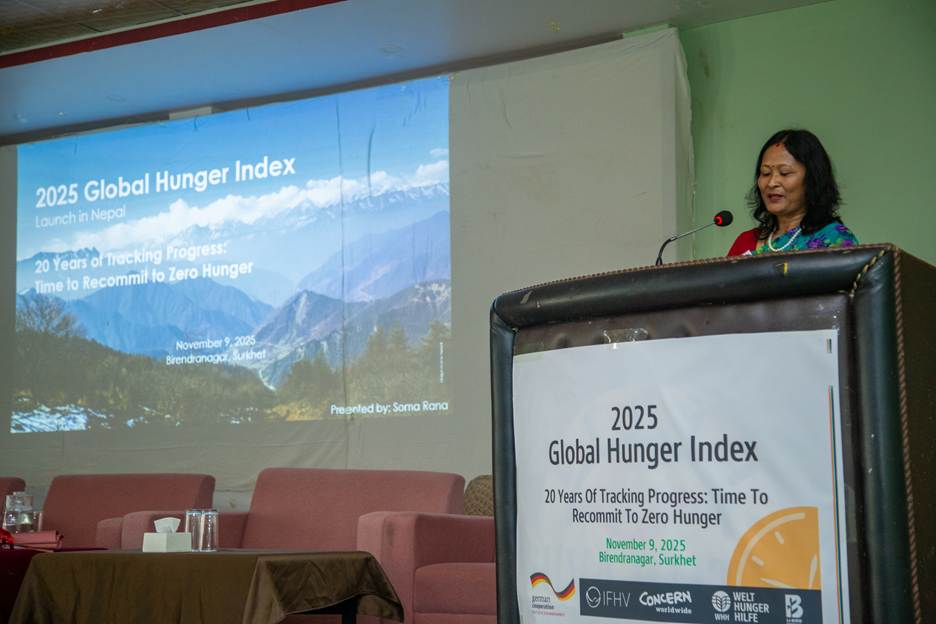
Presenting a provincial lens, Ms. Soma Kumari Rana, Food and Nutrition Expert, compared national and subnational trends and stressed that stunting is higher in the Karnali region and that obesity is rising at the same time, due to changing food habits. She mentioned, “agricultural investment from the government’s side remains low: 3.17% federally and about 8% provincially.” Taking Karnali’s positive examples such as the establishment of kitchen gardens, and organic farming, she called for a need for stronger implementation of policies, better data systems, and revitalization of indigenous and local food systems.
Building Food Security and Nutrition Through Local and Provincial Action
Present on the panel were Mr. Shankar Shah, Secretary of the Ministry of Land Management, Agriculture and Cooperatives (MoLMAC), Sudurpaschim Province, Mr. Ram Bahadur Baniya, Mayor of Budhinanda Municipality (Bajura district), Ms. Laxmi Pun, Vice Chairperson of Barahatal Municipality, and Mr. Sher Bahadur Dahit, Nutrition Officer at UNICEF.
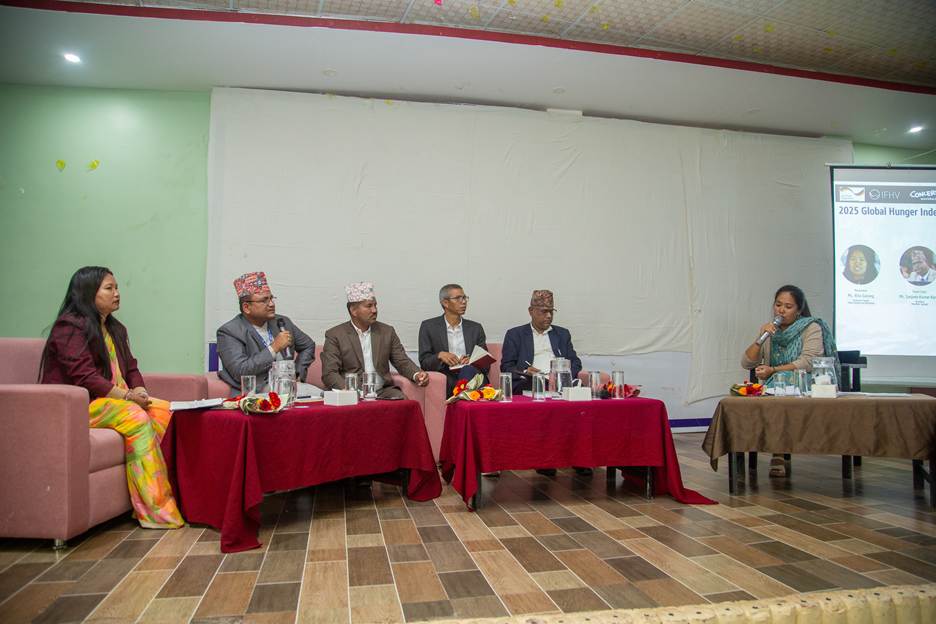
The provincial and local leaders in the panel emphasized the need for climate-resilient agriculture, nature-friendly practices, stronger private-sector engagement, and effective implementation of the Right to Food and Food Sovereignty Act. The panelists shared that both provinces have increased agricultural budgets to 10% and are promoting initiatives such as “One Municipality, One Product,” organic villages, climate-friendly villages, and value-chain development.
Credit: Welthungerhilfe (WHH)
Despite agriculture being the main livelihood for 90% of households, food sufficiency in some areas, like Bajura district, remains limited to three months annually, with 25% of cultivable land lying fallow due to outmigration and labor shortages. The panelists also underscored nutrition initiatives, including kitchen gardens, nutrition-friendly wards, and community committees, alongside the need for stronger coordination under the national Multi-Sector Nutrition Plan (MSNP) phase III, targeted interventions, and improved data systems. Collectively, these efforts so far have helped reduce stunting in Karnali by 19% over the past five years.
Mr. Dahit shared, “Nutrition outcomes are improving, but stronger coordination between provincial and local governments remains essential. We also need more effective Social and Behavior Change Communication efforts that directly reach mothers and children.” He emphasized the importance of precisely targeted nutrition programs and robust data systems to support evidence-based planning and efficient budget execution.
Call for Action
Mayor Hast Pun of Gurbakot, in his closing remarks, urged immediate action to address the growing issue of migration-related fallow land and to strengthen the linkages between agriculture and nutrition. Building on this call for urgent action, speakers also stressed that improving food systems requires understanding the underlying socioeconomic realities faced by vulnerable families. Mr. Ganga Ram Sunar, Coordinator of the District Coordination Committee, reinforced the need for locally tailored policies and highlighted a concerning trend in which poorer households sell nutritious foods to purchase cheaper, less healthy alternatives.
The event concluded with a shared commitment to strengthen multi-sector coordination across all levels of government, develop province-specific hunger and nutrition action plans, promote indigenous and diverse food systems, improve market linkages, and prioritize gender equality, laying the foundation for more resilient, equitable, and sustainable food systems in Karnali and beyond.
