

Despite steady economic growth, Congo-Brazzaville continues to face numerous development challenges. While some improvements in living conditions are visible, they remain mainly concentrated in the capital, while rural provinces remain particularly vulnerable. In addition to these structural weaknesses, for nearly thirty years there have been recurring outbreaks of security tensions linked to political protests, mainly concentrated in the Pool department.
In this context, Acted has supported local development in the Pool and Likouala departments as part of a project to revitalise Congolese civil society. The objective was to strengthen the capacities of Congolese civil society organisations (CSOs) and finance micro-projects led by and for communities.
Implemented between 2022 and 2025 with financial support from the European Union, this programme supported 30 local CSOs in the two departments as key players in sustainable and local development in Pool and Likouala. Using a tool to assess the institutional and organisational capacities of CSOs, Acted identified areas for improvement in their internal functioning and offered them tailored technical support: training, local monitoring and organisational support. This long-term work has enabled the organisations to develop their skills and consolidate their administrative structures.
The result: funding for 22 micro-projects on a wide range of topics, from revitalising an agricultural value chain for livestock feed to training in agroecological practices, psychosocial support for women living with HIV, community reforestation initiatives and nutritional cooking classes.
All these initiatives have been designed with an inclusive approach, sensitive to environmental and gender issues, with a view to supporting community resilience.
The CSO ENCRED: Promoting the professional integration of young people in Kinkala (Pool)
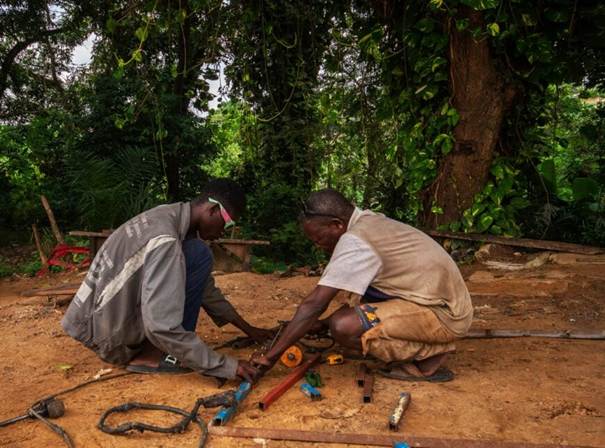
Kinkala, the capital of the Pool department in the Republic of Congo, was severely affected for more than two years (2016-2017) by the socio-political unrest that ravaged the department. These events exacerbated poverty for many families and undermined the professional future of young people. The organisation Enfance Créatrice de Développement (ENCRED), supported by Acted, works to prevent young people from becoming disengaged (unemployment, delinquency, early parenthood) due to a lack of professional opportunities, by offering them concrete prospects for the future.
Between February and November 2025, 25 young people who had dropped out of school (12 women and 13 men) aged between 17 and 20 received vocational training in mechanics, welding, baking, screen printing, sewing, hairdressing and food processing. Their practical apprenticeship with qualified craftsmen was supplemented by a series of entrepreneurship training courses to enable them to launch their own income-generating activities.
Beyond financing the micro-project, Acted supported ENCRED in strengthening its internal structure: developing a strategic plan and a provisional budget to guide its actions over the coming years, networking with other local actors in the department, and supporting the search for institutional funding to accompany the empowerment of its actions. ENCRED is a CSO with great potential, dedicated to promoting more economic opportunities for young people in the Pool region.
OSC HADA: Improving learning conditions in Bétou schools to promote youth enrolment
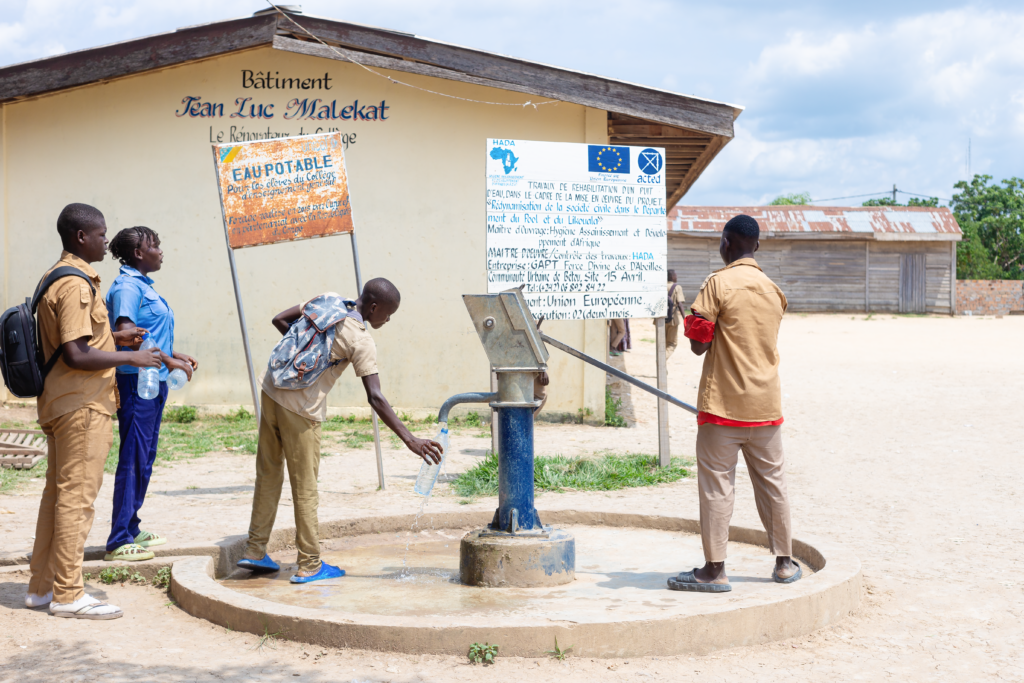
In the urban community of Bétou, in the Likouala department, many public schools face limited access to drinking water and poor sanitation infrastructure. Pupils are forced to drink water from the river or defecate in the open air, exposing them to numerous waterborne diseases (cholera, hepatitis A) and affecting their well-being and learning abilities. It is in this context that the Congolese CSO Hygiene, Sanitation and Development in Africa (HADA) initiated a micro-project aimed at sustainably improving hygiene and sanitation conditions in four public schools in Bétou (three primary schools and one secondary school). Between July and November 2025, fourteen existing latrine blocks were rehabilitated, two new latrine blocks were built and the water points in the four schools were refurbished. In addition to the construction work, HADA organised training sessions for the school management committees of these schools and awareness-raising sessions were held for pupils on hand washing and good hygiene practices. A total of 5,857 pupils – including 3,010 girls – now benefit from a safer and more dignified school environment, promoting attendance and success and enhancing the dignity and safety of pupils, particularly girls. Thanks to Acted’s training sessions and technical expertise, HADA has been able to consolidate its internal practices, improve the quality of its interventions in the field and strengthen its autonomy as a local development actor.
Local CSOs, with their capacities strengthened in a sustainable manner and supported in the implementation of projects, now have the tools they need to independently pursue their local development initiatives and act as agents of change for the benefit of their communities.
