
Photo: Concern Worldwide
Major political changes uprooted life in Syria in late 2024, with more than 3.5 million people estimated to have returned since then, according to the International Rescue Committee.
While the return of people who had been displaced both within Syria and in neighbouring countries were a cause of celebration for many who were reunited with loved ones for the first time since the devastating conflict began in 2011, it hasn’t been smooth sailing. Returnees have faced many challenges, including damage to essential services – such as housing, education, health and sanitation systems.
Conflict has particularly impacted Syria’s education system – primary school attendance rates were at 97% before 2011. UNICEF reports that more than 7,000 schools have been damaged or destroyed, and about two million children are out of school, with another 1.6 million at risk of dropping out.
Alliance2015 member Concern Worldwide, with support from the European Union, is working with communities as they begin to rebuild their lives amid uncertainty.
Child Development Centres
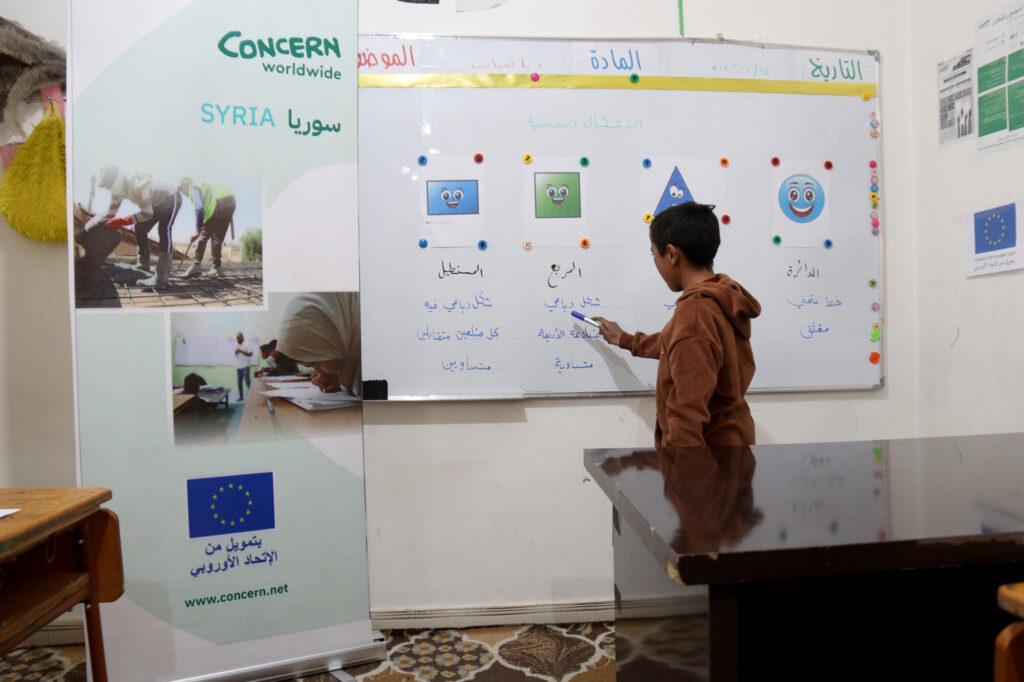
Concern’s 12 Child Development Centres (CDC), which provide non-formal education activities targeting children who have dropped out of school or were unable to continue their education, with the aim of reintegrating them into learning pathways and strengthening their academic and psychological capacities.
The CDCs provide regular sessions in literacy and numeracy, alongside social and emotional learning activities that help build children’s self-confidence and enhance their social and behavioural skills within a safe and stimulating learning environment.
The centres also offer parenting sessions for caregivers, focusing on positive parenting practices, and helping them better understand children’s needs at different developmental stages.
This education and protection project aims to reach around 9,000 people.
Forced to flee Syria
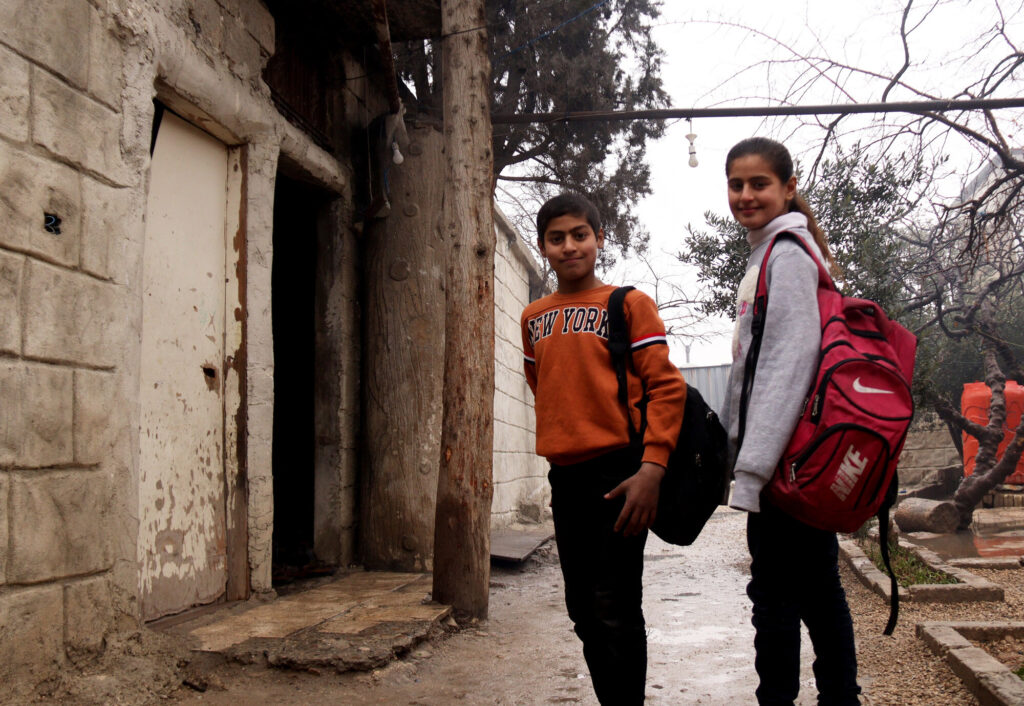
11-year-old twins Amal and
Bassel* are two of the participants in this programme. The children were forced
to flee Syria with their family when they were only infants, amid escalating
violence.
They grew up in Türkiye and were frequently top
of their class there. They learned to speak Turkish growing up but had limited
exposure to Arabic, so when the family were able to return to Syria, the
children struggled in school and faced falling behind their peers as they tried
to learn the language from scratch. The children were so dejected that they
even considered dropping out of school.
They were enrolled in Concern’s Child
Development Centre (CDC) and over six months they made remarkable progress,
learning to read and write in Arabic.
Struggled with Arabic
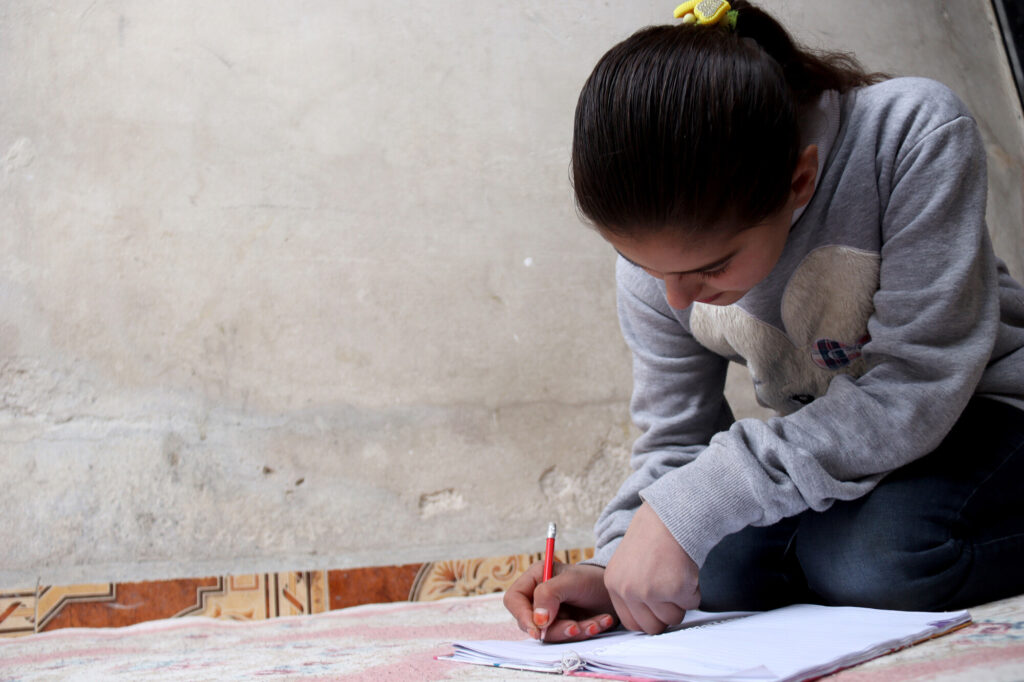
Amal told us: “I used
to struggle with some words that the other children or the teacher used, and I
would ask about them. The teacher would explain, and then I could remember and
use them. I did not know Arabic letters at all, and my knowledge of Arabic was
limited to a few words.
“But now, I can read and write, and it
feels wonderful to learn my own language, which should have been my mother
tongue. I feel hopeful again about continuing my studies and achieving my
dreams.
“When we returned to Syria, I felt
frustrated interacting with other children because I could not speak freely. I
was embarrassed when they spoke quickly, and I found it hard to understand or
communicate with them.”
Her brother Bassel agrees that the CDC has made returning to Syria much easier for him.
He explained: “I love school very much. But I couldn’t continue at school when we returned to Syria. The other children would look at me and laugh when I didn’t understand something they said, or when I tried to speak Arabic but spoke slowly and with a different accent. I used to feel sad and tell my mother that I didn’t like this country because I didn’t understand their language very well.
“I had reached fifth grade, but when we returned to Syria, I couldn’t keep up with the children in the corresponding grade. It also felt unfair to go back to second or third grade, as I would have wasted all the progress I had made.
“I felt so happy when I learned the Arabic letters at the CDC, and then I began practising words, progressing little by little. Now I can write many words, memorise them, and read well. I also enjoy the games we play at the centre. We play group games that I play with the other students.”
A mother’s joy
Their mother, Maha*, spoke with relief about seeing the progress that her children have made over their time in the CDC.
“When Concern team began the survey for registration in the non-formal education programme, I felt overjoyed. I truly believe God arranged this for my children so their future would not be lost. It would have been extremely difficult for them to learn in formal schools, as they did not know the basics of reading or writing.
“When I visited the centre and saw the facilities and the way the staff worked, I felt hope again, believing that my children could continue their education.
“My children did not know how to read or write at all, not even the Arabic letters, despite my repeated efforts to teach them at home. That was not a priority for them until they were shocked when they returned to Syria and the local schools,” Maha said.
The conflict robbed a generation of students of their education, but Maha is thrilled that her children will be able to continue with their studies.
She said: “Step-by-step, they have acquired the basics of reading and writing, reaching a level that now allows them to progress in formal schools and pursue the education that I was deprived of, achieving dreams that have become mine as well.”
*Names have been changed for security reasons
Article by: Concern Worldwide
Photos by: Ahmad Al Aboud/Concern Worldwide
