

As devastating floods and landslides affect communities across Nepal, Alliance2015 members are providing emergency assistance in some of the worst-affected areas while assessing needs and coordinating with local authorities and partners.
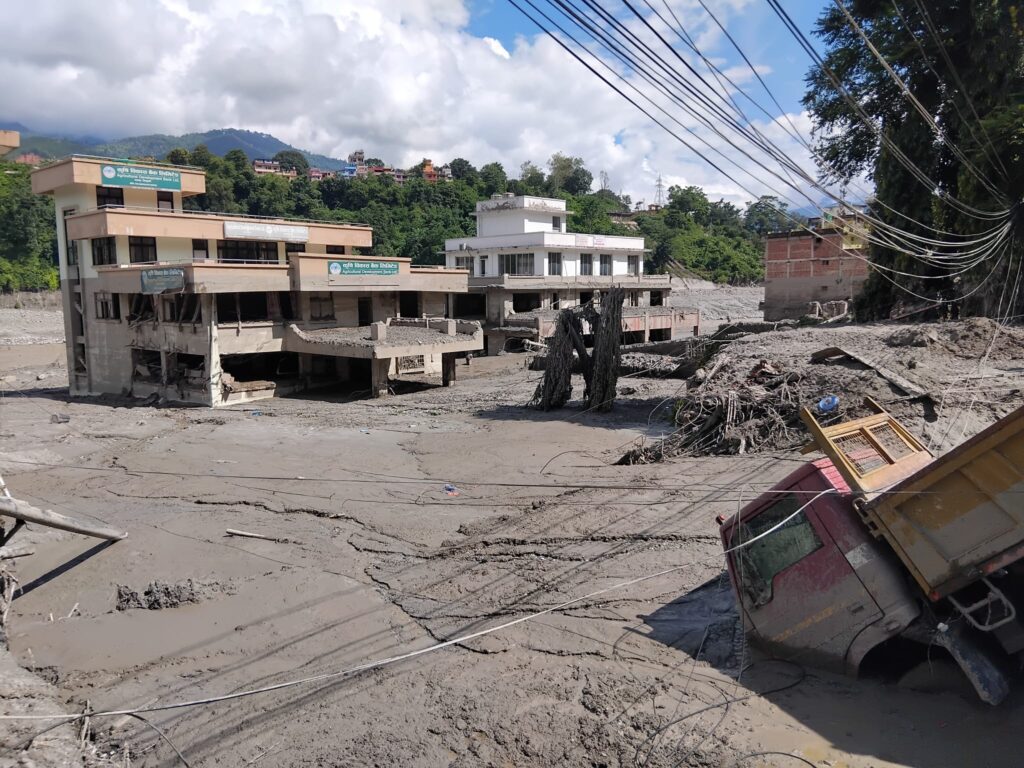
Severe flash floods and landslides have caused widespread destruction across parts of Nepal, with communities in mountainous areas among the hardest hit. Homes, farmland and livelihoods have been lost, while roads and bridges have been damaged or destroyed, making access to affected communities particularly difficult.
The situation remains fluid. Humanitarian teams are continuing to assess the scale of the damage and identify the most urgent needs, while families who have lost their homes and livelihoods require immediate support with food, shelter, water, sanitation and essential supplies.
Three Alliance2015 members — Welthungerhilfe (WHH), People in Need (PIN) and Helvetas — are currently responding in affected areas.
PIN: reaching communities and supporting local authorities
PIN, working with its local partner Community Self-Reliance Centre (CSRC), reached Uttargaya in Rasuwa on the third day after the floods. The organisation has longstanding relationships in the area, having worked with communities and local governments in Rasuwa for more than a decade, including on disaster preparedness and recovery following the 2015 earthquake.
PIN is supporting three emergency holding centres hosting around 360 people and has distributed essential non-food items to approximately 250 households, including buckets, boots, water bottles, tents and temporary sanitation facilities. Food assistance has also reached hundreds of people, with further humanitarian supplies being transported to affected areas.
The floods also destroyed two of PIN’s three warehouses in the area. Remaining stocks were transferred to local authorities to support the emergency response.
Beyond direct assistance, PIN is working closely with local governments to assess needs and coordinate the delivery of aid. It is also seconding information-management staff to Nepal’s National Disaster Risk Reduction and Management Authority (NDRMA) and the Uttargaya local government. Protection and psychosocial support, drinking water, essential relief items and community kitchens are among the current priorities.
WHH: providing food assistance as needs persist
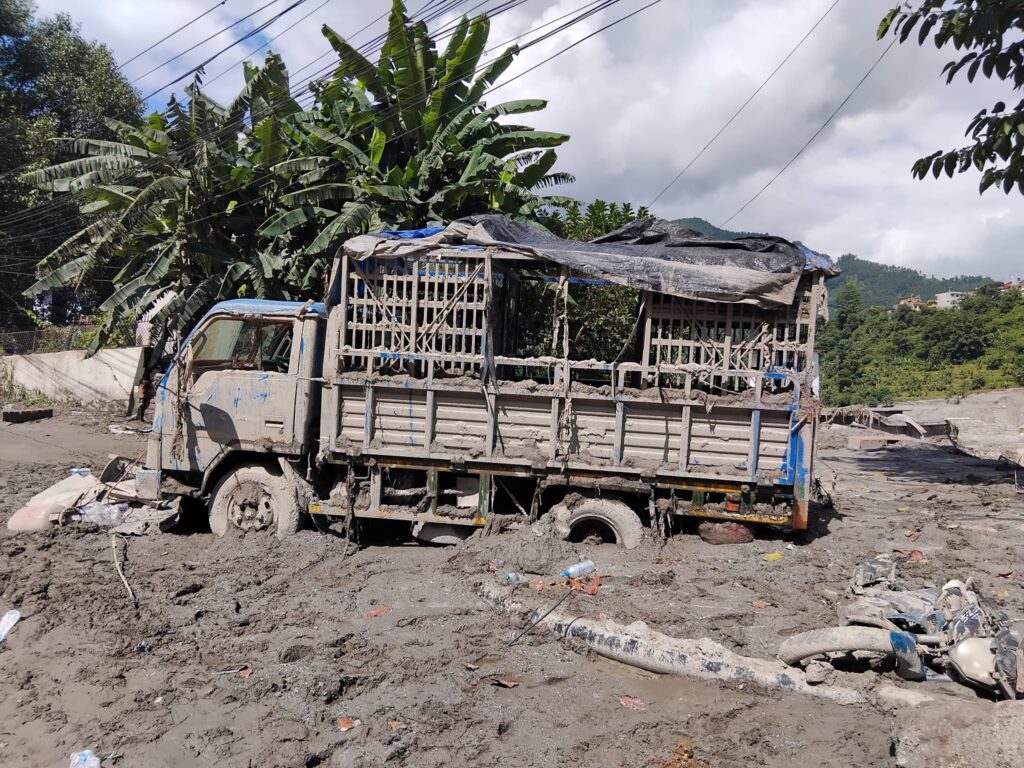
WHH is supporting the emergency response through food assistance and essential relief supplies while continuing to assess needs in affected communities. The organisation initially allocated €100,000 from its emergency relief fund and prepared food packages, hygiene kits and emergency shelter materials.
In early September, WHH distributed food packages to 300 affected households in Uttargaya. The packages include staple foods such as rice, lentils, salt, cooking oil, sugar, beaten rice and biscuits.
However, the immediate needs remain significant. Following a recent visit to flood-affected communities, WHH Nepal Technical Expert Raj Pariyar highlighted continuing gaps in food assistance, with some families expected to need food support for at least another 15 days.
Shelter, drinking water, sanitation and hygiene supplies are also urgently needed. With winter approaching, the situation could become particularly difficult for families in the affected mountain areas who remain in temporary shelters. Warm blankets, mattresses and winter clothing will be increasingly important as temperatures fall.
Helvetas: responding with local partners and looking towards recovery
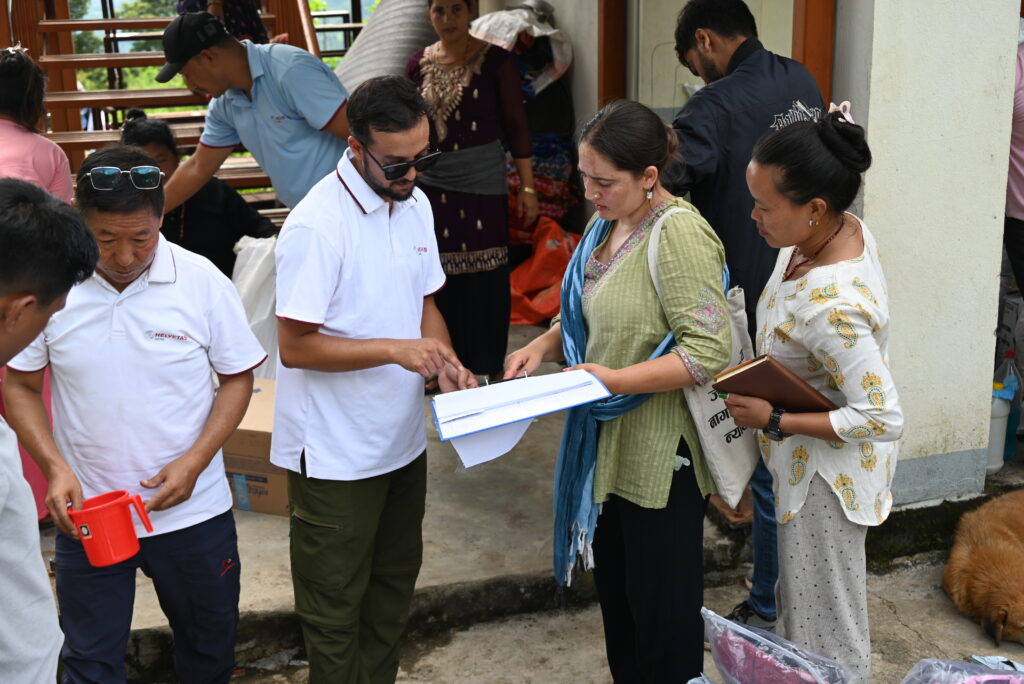
Helvetas deployed a small team to the affected areas within 48 hours of the floods to assess the humanitarian situation, meet affected communities and coordinate with local authorities and other actors.
In its initial response, Helvetas distributed clothing for around 400 people, hygiene kits for 150 families and 1,000 sanitary pads. The organisation is currently planning for a more comprehensive emergency response, including the provision of essential relief items, winterization kits, temporary shelter support for most vulnerable households, as well as improving WASH conditions in displacement centres.
Further, Helvetas is planning a recovery response, including economic recovery (agricultural livelihoods recovery, small business grants, cash for work, etc) as well as rehabilitation of water supply infrastructure.
Coordination as the response develops
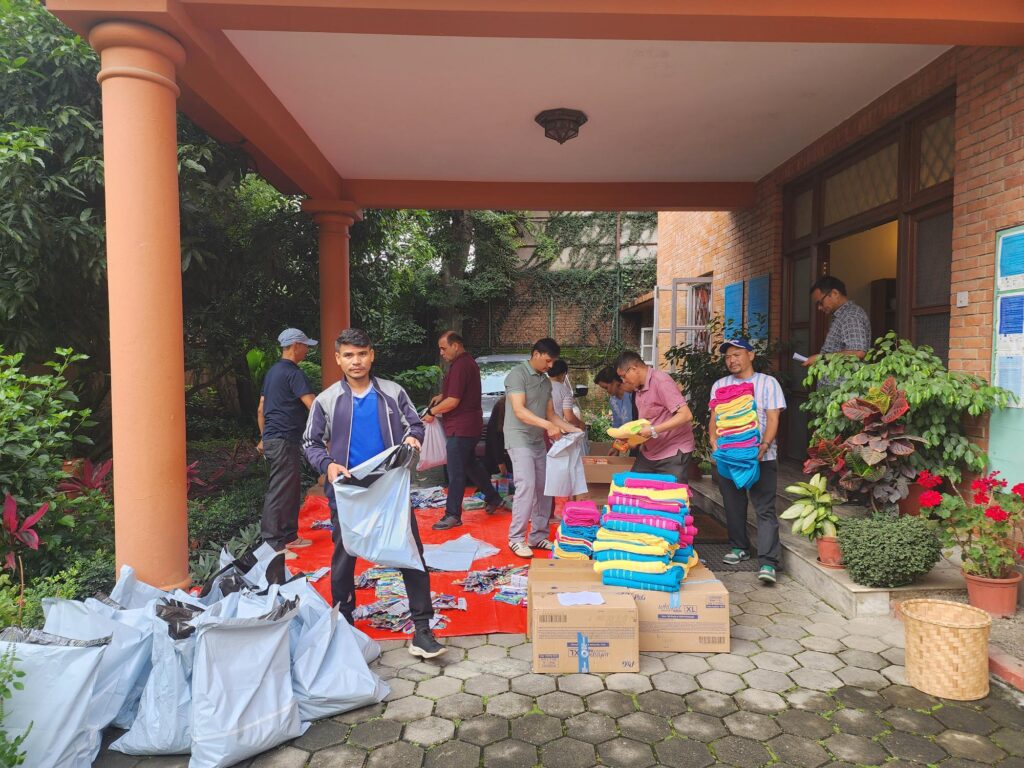
While the three organisations are responding through their respective programmes and partnerships, they are also maintaining close communication on the ground. PIN, WHH and Helvetas are sharing information from their assessments and discussing needs, geographic coverage, logistics and available resources.
This coordination is particularly important in a context where access remains challenging and information about the full scale of the disaster is still emerging. Working alongside local authorities and partners also helps ensure that assistance complements existing efforts and reaches communities with the greatest needs.
Discussions are ongoing around further joint assessments and how existing programmes could contribute to recovery and reconstruction. As the situation becomes clearer, there may also be opportunities for closer collaboration between Alliance2015 members, including around coordinated programming and fundraising.
For now, the priority remains supporting affected communities through the immediate emergency while continuing to understand how needs are likely to evolve in the weeks and months ahead.
Article by Marina Lourdes Losilla Jiménez
