

Picture description: From left to right: Edgar Okoth, Director of the SUN Civil Society Alliance (SUNCSA); Christian Schniepper, Country Director at Welthungerhilfe Kenya; Nelly Kingston, Interim Country Director at Concern Worldwide and Anthony Njegi, representing the Embassy of Ireland, at the GHI Kenya 2025 launch in Nairobi. Photo credit: James Gichuru (Photojournalist Standard Media Group)-
On March 17, 2026, Kenya took a critical moment to reflect and reset its efforts to end hunger. More than 120 stakeholders gathered in Nairobi for the launch of the 2025 Global Hunger Index (GHI) Kenya Edition, led by Welthungerhilfe and Concern Worldwide. Government leaders, civil society representatives, private sector actors, and development partners came together with a shared recognition that progress is possible but not guaranteed.
“I look forward to a day when we build a strong nexus grounded in data to guide investments toward achieving SDG 2 by 2030,” said Fedha Daritsu, Lead at the Partnerships Council of Governors (COG). She highlighted the importance of coordinated action to address hunger and food insecurity in Kenya. Her remarks set the tone for discussions focused on long-term solutions shaped by local priorities and evidence-based decision making.

This emphasis on coordinating and locally led action reflects a broader reality. Ending hunger in Kenya remains within reach, but only if commitments translate into coordinated and sustained efforts that respond to the realities people face.
Hunger in Kenya: A Crisis Hiding in Plain Sight
Kenya’s 2025 GHI score of 25.9 places the country 103rd out of 123 countries, within the serious hunger category. While the country made progress in reducing hunger between 2000 and 2016, this momentum has stalled. Improvements in child survival and nutrition have not translated into equitable access to food.
Hunger persists not because solutions are unknown, but because they are not reaching everyone, at scale. As highlighted in the Kenya GHI brief, hunger is increasingly unequal, invisible in national narratives, and deeply rooted in structural challenges.
Looking more closely at who is affected reveals the depth of this inequality.

Beyond Averages: Who Is Being Left Behind?
National averages obscure the realities experienced across the country. Kenya’s national progress masks deep disparities:
- Urban hunger is rising, driven by high food prices, informal employment, and weak social protection systems.
- Arid and Semi-Arid Lands (ASAL) counties and coastal regions continue to face chronic food insecurity, with communities trapped in cycles of crisis.
- Children remain at risk, with nearly one in five under five years stunted—limiting their future potential.
These realities point to a central truth:
hunger is not just about food production. It is about whether systems ensure fair access, affordability, and work for all.
These systemic gaps are becoming more visible as pressures on food systems intensify.

A Changing Risk Landscape
Participants at the launch highlighted how multiple pressures are reshaping hunger in Kenya in interconnected ways.
Climate variability continues to affect agricultural production and livelihoods. With over 80% of agriculture dependent on rainfall, droughts, floods, and unpredictable seasons, are now part of everyday reality for many farmers. These shocks disproportionately affect smallholder producers and vulnerable households, driving food price volatility, and deepening inequality.
At the same time, economic growth has not translated into equitable access to food. Despite steady GDP growth, millions remain unable to afford nutritious diets. Growth has not been inclusive, and food systems have not been adapted to ensure affordability and accessibility.
Pressure on land, water, and pasture continues to fuel local conflicts, particularly in arid and semi-arid regions where competition over resources can disrupt livelihoods and food systems.
Together, these overlapping pressures are placing increasing strain on Kenya’s food systems and deepening existing inequalities.
Systems Under Strain: Why Hunger Persists
The GHI findings and discussions in Nairobi underscore that hunger in Kenya is rooted in systemic challenges:
- Underinvestment in agriculture and food systems, despite their central role in the economy
- Fragmented policies and weak coordination across sectors
- Limited and uneven social protection systems
- Fiscal constraints linked to rising public debt
- Governance gaps that reduce the impact of available resources
Joel K. Tanui, Irrigation Secretary at the State Department for Irrigation, underscored the scale of both the challenge and the opportunity. “Over the past 70 years, the government has only developed 288,000 hectares under irrigation, just 20 percent of Kenya’s full potential. To achieve food sufficiency, we must think and act beyond the norm.”
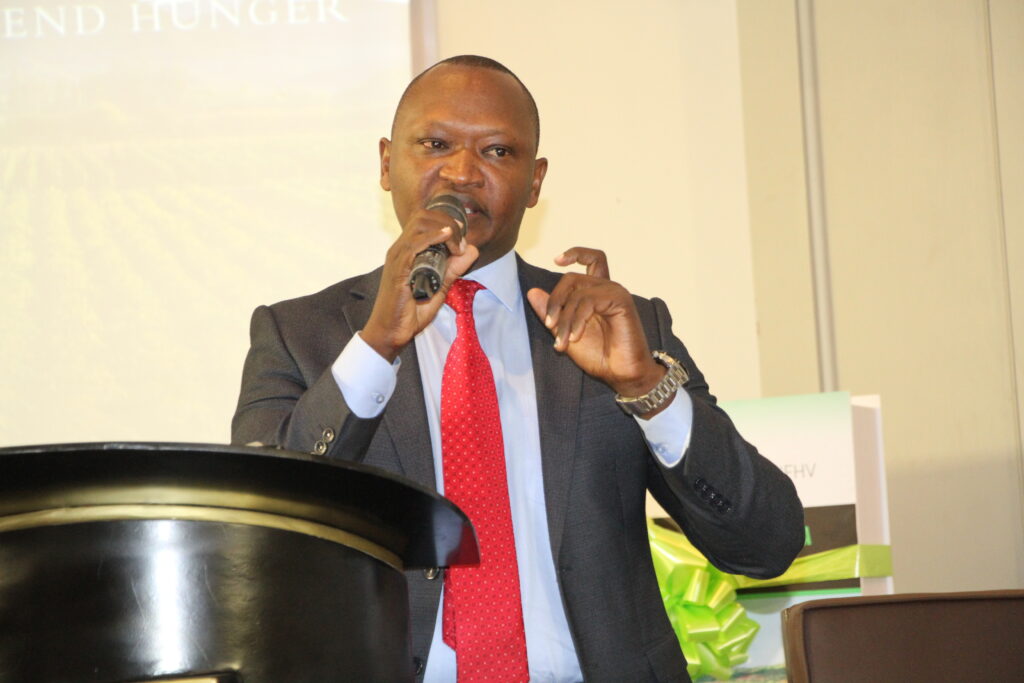
Tanui also highlighted the government’s target of expanding irrigation to 1.3 million hectares. He stressed that achieving this vision will require shared investment and partnerships that build on national priorities and local expertise. “Government alone cannot meet this need. We must work closely with the private sector to achieve food and nutrition security by 2030.”
These perspectives reinforce a central message from the launch. No single actor or sector can address hunger alone. Food security sits at the intersection of agriculture, health, water, markets, and social protection.
A Collective Responsibility
Across the discussions, speakers from government, civil society, and development partners converged on one key message:
partnership is not optional. It is essential to address everything needed to overcome systematic challenges.
Government leaders emphasized the need to scale irrigation, climate resilience, and agricultural investment.
Health sector voices reinforced that nutrition outcomes depend on stronger food systems.
Private sector actors play a key role in shaping supply chains, market
access, and the availability of affordable nutritious foods.
Civil society called for greater accountability and community participation.
Development partners highlighted the urgency of moving from short-term interventions to long-term systems strengthening.
From Commitment to Accountability
The 2025 GHI Kenya brief calls for a decisive shift, from fragmented efforts to coordinated, accountable action across sectors:
- Align policies and financing across sectors
- Increase and target investments in food and nutrition systems
- Scale adaptive social protection to protect vulnerable populations
- Strengthen data systems and early warning mechanisms
- Center community voices and locally led solutions
- Address both rural and urban hunger dynamics
Global examples show that progress is possible where political commitment, strong institutions, and inclusive approaches come together. Kenya has the foundation. The challenge now lies in accelerating implementation in ways that reflect local priorities and realities.
A Moment to Recommit
The theme of this year’s GHI— “Recommitting to Zero Hunger through multi-sector collaboration”—resonates strongly in the Kenyan context. As global progress toward Zero Hunger stalls, Kenya’s experience reflects a broader lesson:
without equity, coordination, and accountability, progress will remain fragile. In this sense, the Nairobi launch was not just a reflection on data. It was a call to action. Ending hunger in Kenya requires moving beyond intentions to sustained, collective action that transforms food systems and delivers for those most at risk.
Article by Susan Njoki Mwangi, Welthungerhilfe
