

As part of the project “Intensification and scaling up of fruit growing, agroecology, biotechnology, and digital agriculture: improving organic fruit production and its contributions to environmental protection in the Valleys,” supported by AECID and implemented by Ayuda en Acción in partnership with Somos Dron and the Proinpa Foundation, a group of Bolivian women is making a mark in sustainable fruit growing. They are doing so not only through the use of drones but also by applying innovative technologies that benefit both the environment and rural communities.
Aviadoras del futuro: from learning to outreach
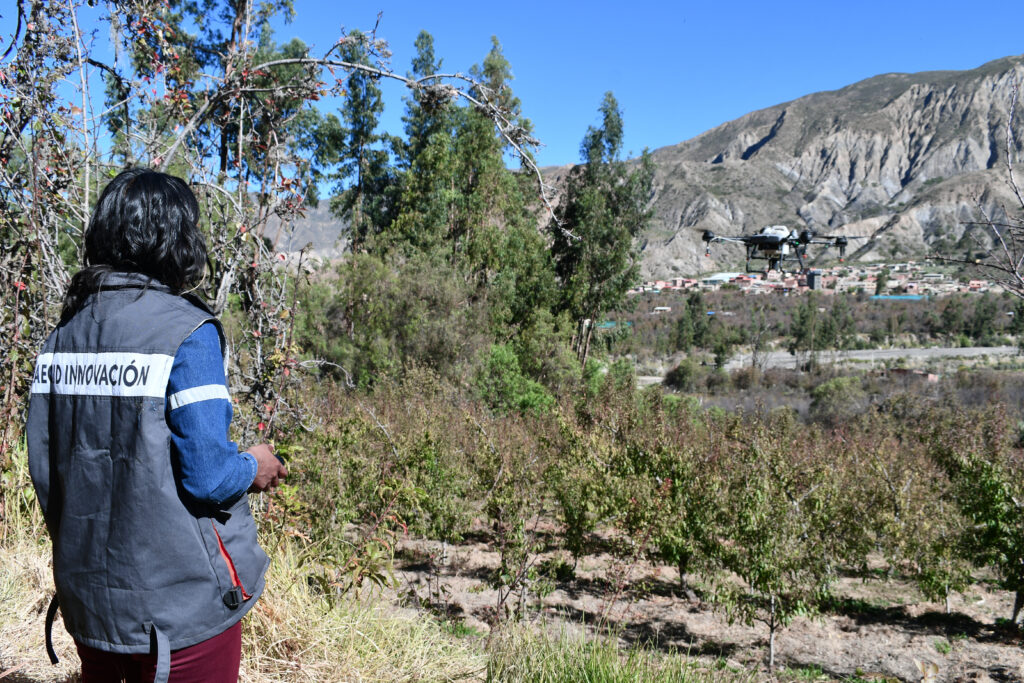
The women’s association “Aviadoras del futuro” (“Aviators of the Future”, AVIF) is a clear example of the impact innovation can have in rural areas. After months of training in piloting drones for phytosanitary use, these young women have become leaders in the sustainable management of fruit crops—such as apples, peaches, and grapes—using bio-inputs instead of conventional chemicals for spraying. This technique not only improves production but also protects the environment by optimizing available resources in hard-to-reach areas.
“Thanks to Ayuda en Acción, I trained as an agricultural drone pilot alongside other women. Today, we apply this technology to the community’s peach and apple crops, reducing chemical use and improving spraying with bio-inputs. I feel happy and proud to lead a women’s organization that promotes the responsible use of drones in agriculture,” says Esperanza González, a farmer from San Lucas. This young woman is fully convinced of the value of this technology in rural life, and above all, for rural communities and their families, because it allows them to improve not only production conditions and the quality of the final product, but also their living conditions.
The highlight of their work is not just the use of drones, but the comprehensive model they have established. “Aviadoras del futuro” has established itself as an association that not only provides drone-based spraying services but also offers training to others interested in learning how to operate this agricultural technology.
“We went through three stages of training and saw how these types of drones aren’t just for spraying; they also improve our safety and reduce the physical strain of working in difficult terrain. Today, through our organization, we promote the use of bio-inputs and teach more women how to use this tool. I feel safe, capable, and proud of what we’ve achieved,” says Alizon, a pilot from Cotagaita, who now works alongside her colleagues to drive the growth of AVIF.
The direct impact of this project extends beyond the group of women trained as drone pilots. It is estimated that many fruit-growing families in the Inter-Andean Valleys will see improvements in their crops thanks to the use of bio-inputs. This reduces the use of conventional pesticides and leads to an increase in the production of healthy fruit.
“Our goal isn’t just to sell a service, but to share knowledge. With our phytosanitary drones, we aim to protect the health of the plants and those who grow them. We want more people to learn about this technology-driven venture led by rural women,” adds Esther, an active member of the AVIF group.
A project that drives change
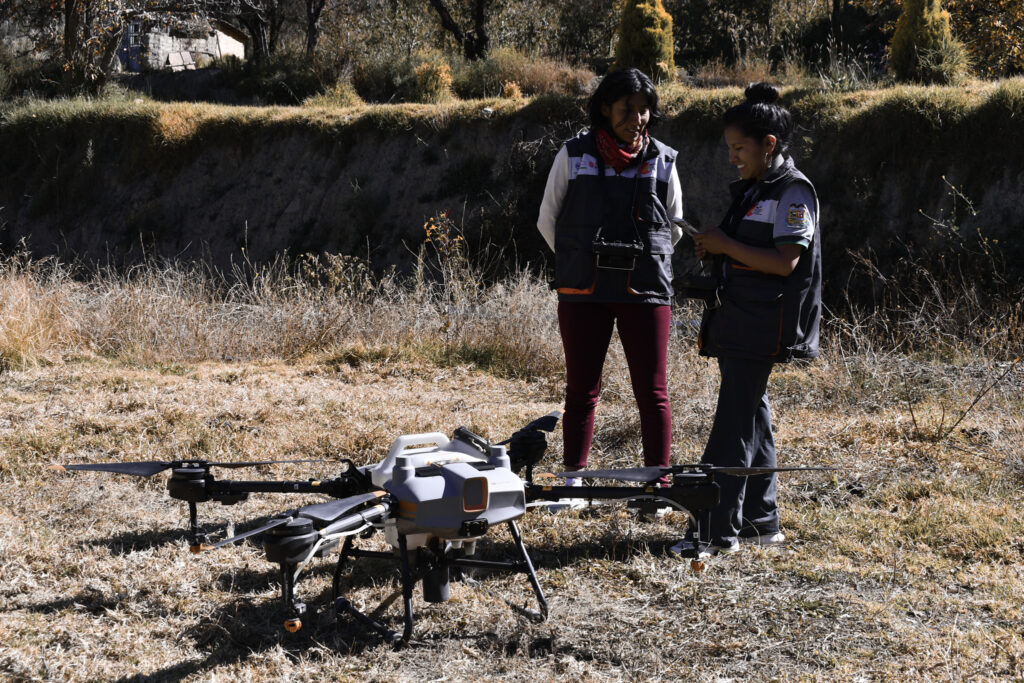
The “Aviadoras del futuro” have demonstrated that technology not only has the power to increase productivity, but to do so in a sustainable way. With an investment in training amounting to more than 10 hours of instruction, this project has had a real impact on both the local economy and environmental conservation. In addition to tangible benefits for crops, the project has demonstrated the power of innovation as a driver of change.
Drone pilot training like the kind these women receive has an estimated value of 3,000 euros per person. This investment not only ensures improved agricultural production but also positions women as key agents in the transition toward a more modern and eco-friendly agricultura.
At the “Junt@s Emprendemos – MyPES Fair,” organized by the European Union, the “Aviadoras del futuro” demonstrated how drone technology can be used to have a positive impact on environmental sustainability. At the fair, in addition to showcasing this impact, young women from these communities were highlighted as role models for leadership and innovation. There, they also received invitations and contacts from producers interested in replicating this experience in other regions of the country.
Article by Ayuda en Acción
