
How Prosopis supports livestock resilience in Somaliland
Picture credit: Welthungerhilfe/Yusuf Abdirahman
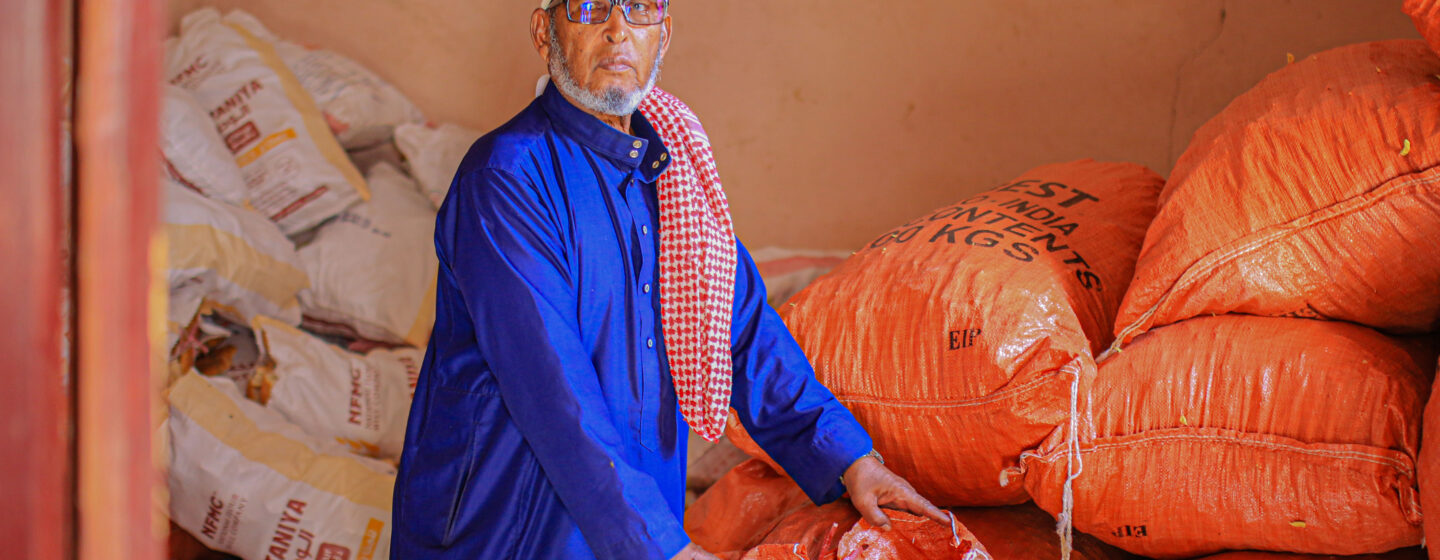
In the drought-affected rangelands of Somaliland, where livestock is the backbone of rural livelihoods, the effects of climate change are becoming increasingly severe. Recurrent droughts are reducing pasture availability, weakening livestock, and placing entire household at risk. For pastoralists like Abdi Warsame, whose livelihood depends on camel milk production, drought threatens not only his source of income but also the survival of his camel herd.
“When drought occurs, the main challenge is the availability of feed for our livestock,” Abdi Warsame explains. “Without enough feed, milk production declines, and in many cases, we lose animals.”
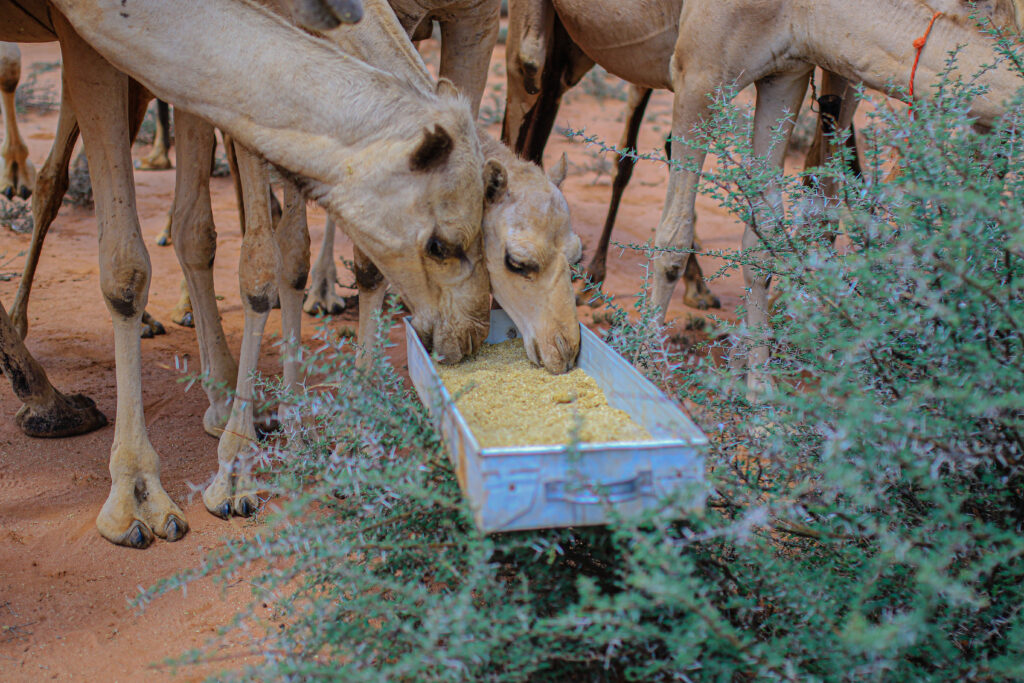
While drought pressures continue, another silent threat has been expanding across these rangelands: the invasive plant Prosopis juliflora. A thorny shrub or small tree native to Central and South America, it was introduced to many arid regions for erosion control and fuelwood, but has since spread aggressively. Known for overtaking grazing land and suppressing native vegetation, it is widely viewed as a threat by local communities.
Yet what if this invasive plant could become part of the solution? With support from Welthungerhilfe (WHH) and partners Acted and Candlelight under the EU Breach project, Proposis is being turned into safe, usable livestock feed.
From invasive species to livelihood solution: Turning Prosopis into livestock feed in Somaliland
At the heart of the initiative is a simple idea: turning Prosopis pods into locally produced livestock feed, while supporting both the environment and local livelihoods. As part of the activity, 50 community members, including Abdi Warsame, participated in collecting Prosopis pods from invaded rangelands in Kabadheere, Ali Hussein Koosaar, and BEER village in the Burao district of central Somaliland. The collected pods are transported to the AROORI Livestock Research Center, where they are dried, milled, and processed into feed.
Milling crushes both the pods and their seeds, helping to limit further spread of Prosopis. The processed material is then mixed with locally sourced hay to improve its nutritional value. In total, 48 metric tons of Prosopis based feed have been produced. Abdi Warsame alone collected 2.6 MT, which he stored and later relied on during the severe drought.
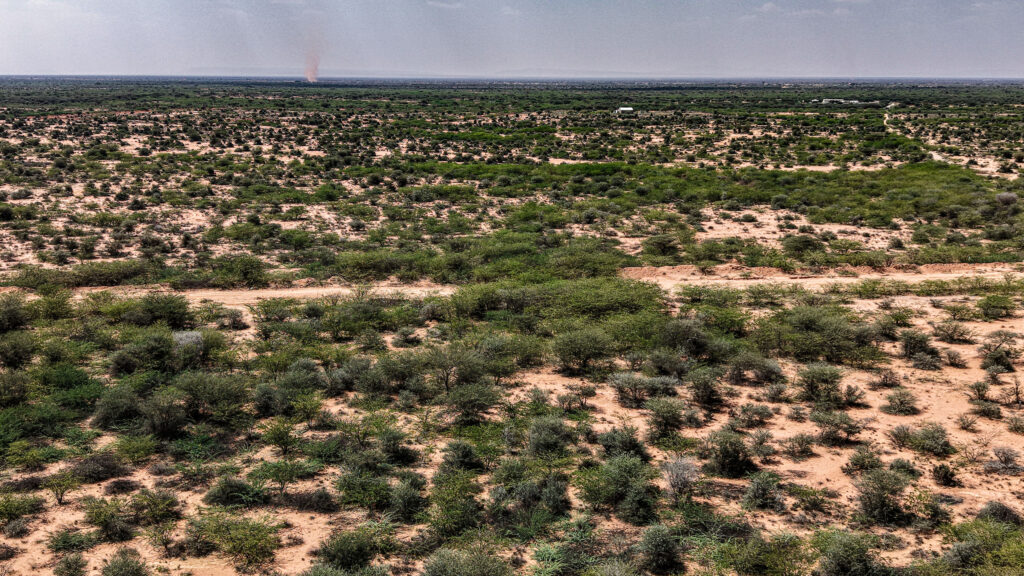
The feed mixture consisting of 80% milled Prosopis pods and 20% local hay was designed to ensure both palatability and adequate nutrition. While livestock can eat Prosopis pods, high consumption can cause digestive and dental problems, making it important to process and incorporate them into balanced feed. When consumed unprocessed, many seeds pass undigested through the animals and are excreted in dung, contributing to the further spread of the invasive plant.
Beyond its immediate use, processing the pods also helps restore rangelands by destroying seeds during milling and reducing the plant’s further spread.
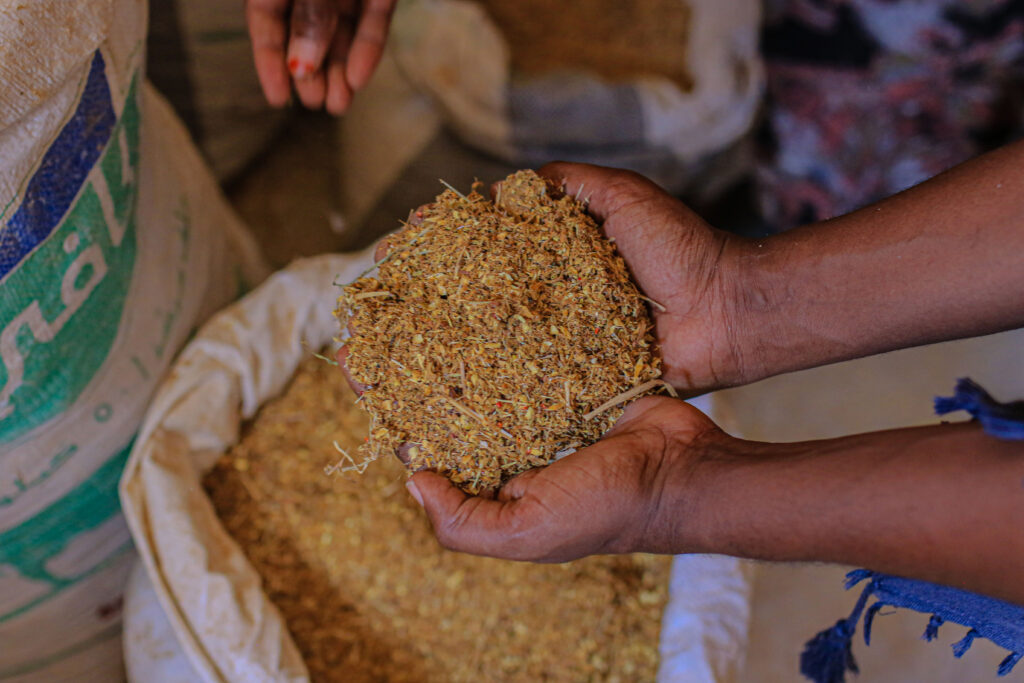
For Abdi Warsame, the initiative proved essential during the drought in Togdheer region in central Somaliland. As natural pasture declined, he used the feed to sustain his camels.
“With this feed, my camels continued to produce milk even when there was no pasture,” he says. “It helped me protect my animals and continue my livelihood.”
At the same time, his perspective on Prosopis has shifted. By collecting the pods, Abdi Warsame contributes to controlling an invasive species that has long degraded rangelands.
“Before, Prosopis was just a problem,” he reflects. “Now I see it as an opportunity. We can use it to feed our animals and reduce its spread at the same time.”
Turning experience into opportunity: Abdi Warsame’s vision for a local feed business
Encouraged by the results, Abdi Warsame is already looking ahead. He plans to invest in a small milling machine together with other dairy producers, with the aim of producing livestock feed not only for his herd but also for other pastoralists in the area.
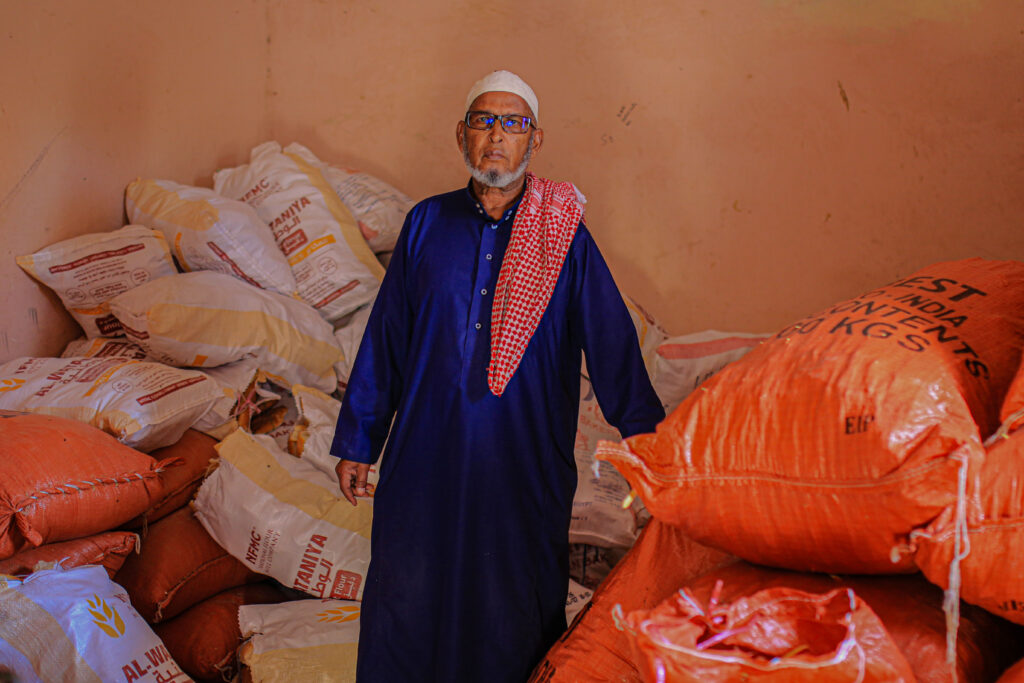
“I want to start a small business,” he explains. “There is demand for this feed, especially during drought. It can help others and also bring income.”
His ambition reflects a broader shift from short-term coping to long-term resilience. Building on his experience, Abdi is positioning himself not only as a livestock owner, but also as a potential service provider within his community. However, he notes that access to start-up capital and equipment remains a key challenge to fully establish the business.
Abdi Warsame’s story highlights how pastoralists are adapting to increasingly difficult conditions by combining local knowledge with new approaches. In doing so, they are not only protecting their livelihoods, but also contributing to the restoration of degraded rangelands.
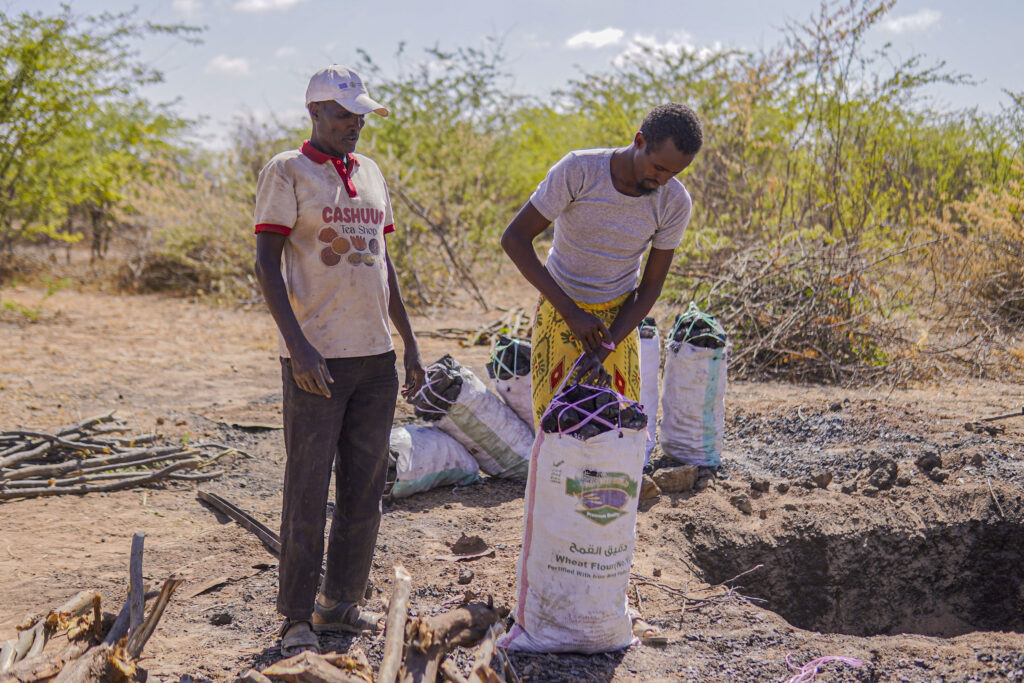
Beyond individual households, new uses for Prosopis are emerging across the community. It is being turned into livestock feed, used to generate income through clearing activities and charcoal production from Prosopis wood, repurposed as fuel for cooking, and even crafted into products such as walking sticks and furniture—reshaping how people relate to the plant.
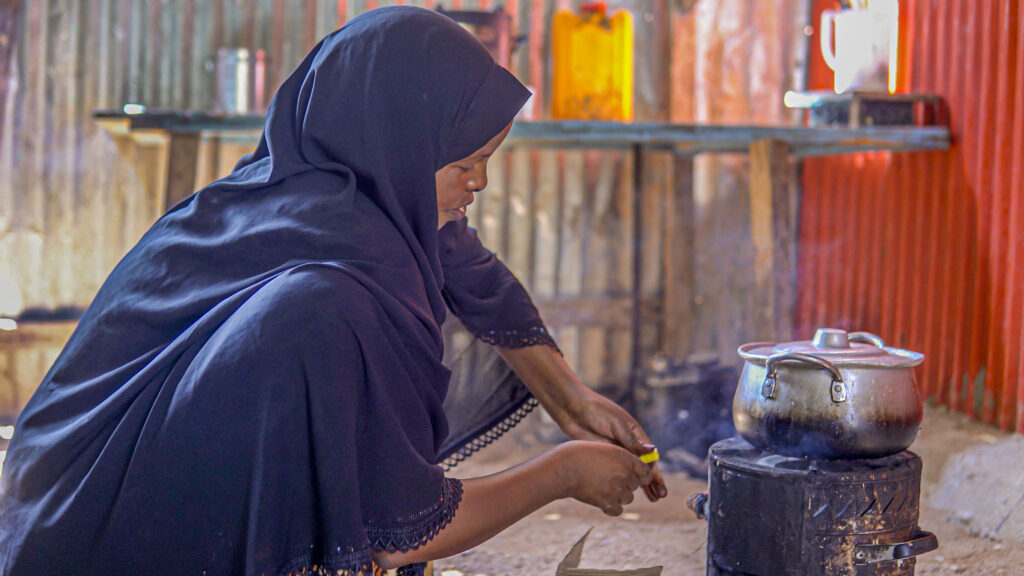
As climate pressures continue to intensify across Somaliland and beyond, such locally driven solutions offer practical pathways to strengthen resilience while creating new economic opportunities.
Article by Welthungerhilfe
