

9 December 2025, Brussels
At a time when two officially confirmed man-made famines are unfolding in plain sight, the 2025 Global Hunger Index (GHI) was launched in Brussels with a powerful reminder: the right to food is non-negotiable, and progress against hunger—painfully earned over two decades—is at risk of unravelling.
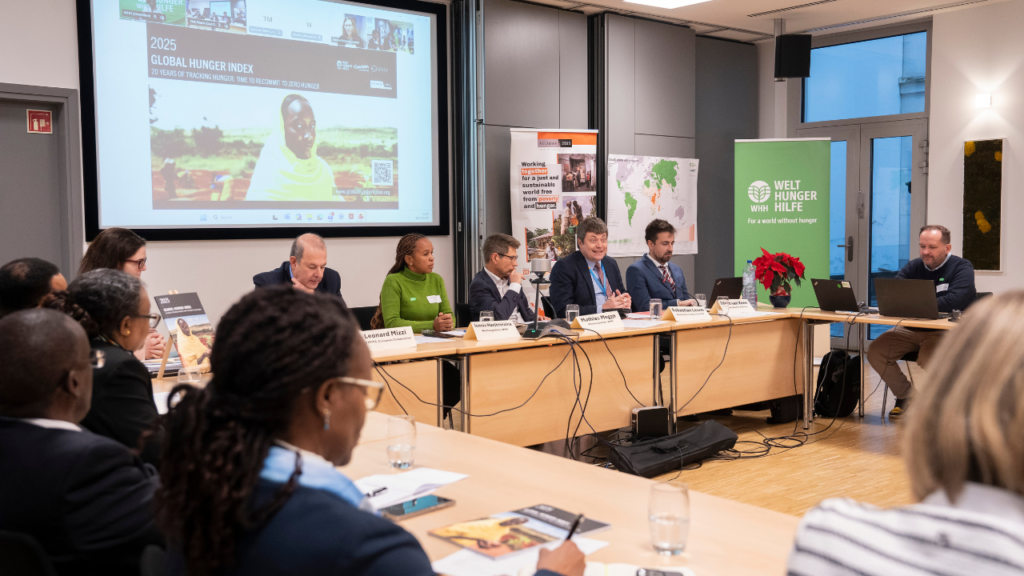
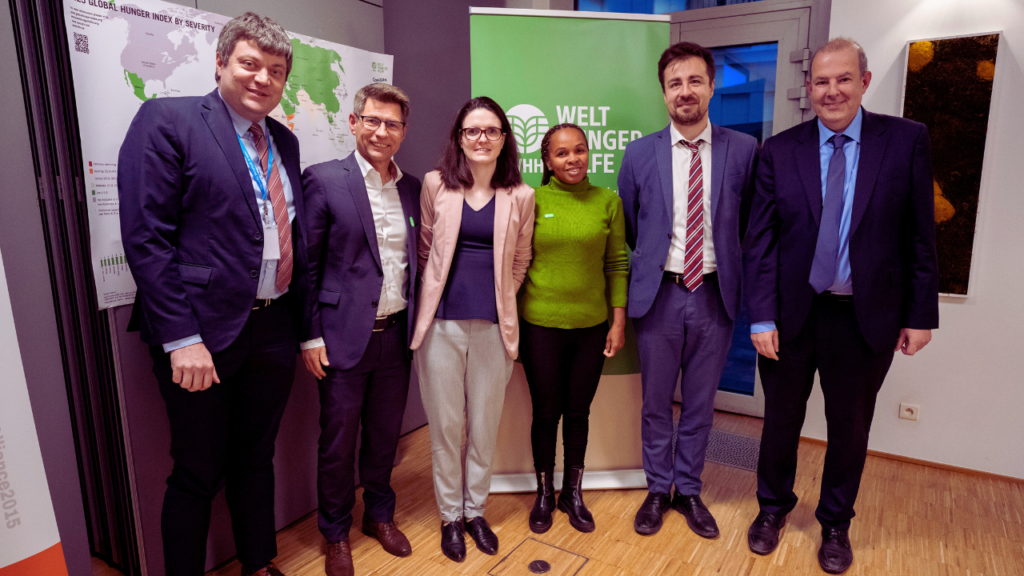
Hosted at the German Permanent Representation to the EU, the event brought together representatives from EU institutions, Member States, civil society, academia, and colleagues from Madagascar and Malawi, whose countries experience some of the most acute hunger levels globally. Marking the GHI’s 20th anniversary, speakers reflected on two decades of data and learnings, while warning that the world is drifting further away from the Sustainable Development Goal of achieving Zero Hunger by 2030.
A Sobering Picture: Stalled Progress and Rising Crises
Opening the event, Sebastian Lesch, Head of Development Policy at the German Permanent Representation, underlined the critical moment in which this GHI is released.
He emphasised that development cooperation for food security and nutrition is more essential than ever for Germany, and the GHI clearly demonstrates its added value. The data show that progress is possible when investments are sustained and policies are coherent.
Lesch also highlighted the importance of bringing together all perspectives—public institutions, the private sector, civil society organisations, and local actors—to build a collective response capable of reversing current trends.
Gretta Fitzgerald, Head of International Advocacy at Concern Worldwide, presented the 2025 Global Hunger Index on behalf of Alliance2015. The report shows that global hunger has stagnated since 2016, with the world’s GHI score remaining in the moderate category but showing no real progress.
Key findings include:
- At least 56 countries will fail to reach low hunger by 2030 at the current pace.
- Seven countries suffer alarming hunger levels, including Madagascar and South Sudan.
- 20 food crises driven by conflict affected nearly 140 million people in the past year.
- Data gaps in contexts such as Sudan, Gaza, Burundi and Yemen mask even deeper crises.
Conflict: The Most Destructive Driver of Hunger
A keynote intervention by Simone Bunse, Researcher at SIPRI, placed conflict firmly at the centre of today’s hunger crises.
Bunse underscored that hunger, conflict, and climate change are deeply interconnected crises, reinforcing one another in destructive cycles. Yet the reverse is also true: progress in one area can trigger improvements across the others. She showed that peace-sensitive, locally driven food systems interventions can successfully transform vicious loops into virtuous ones.
Her message was unequivocal: “These crises are political and man-made—and therefore preventable.” Understanding and breaking these cycles is central to SIPRI’s work.
Bunse concluded with three policy priorities for more effective action:
- Adopt systems thinking to reflect the interconnected nature of today’s crises, overcome siloed approaches and duplications.
- Apply a humanitarian–development–peace nexus approach, ensuring more coherent, cost-effective and sustainable interventions.
- Invest in strategic partnerships, especially with local actors, whose contextual knowledge is essential for meaningful, community-owned and sustainable change.
Panel Debate: Accountability, Sustainability, and Local Realities
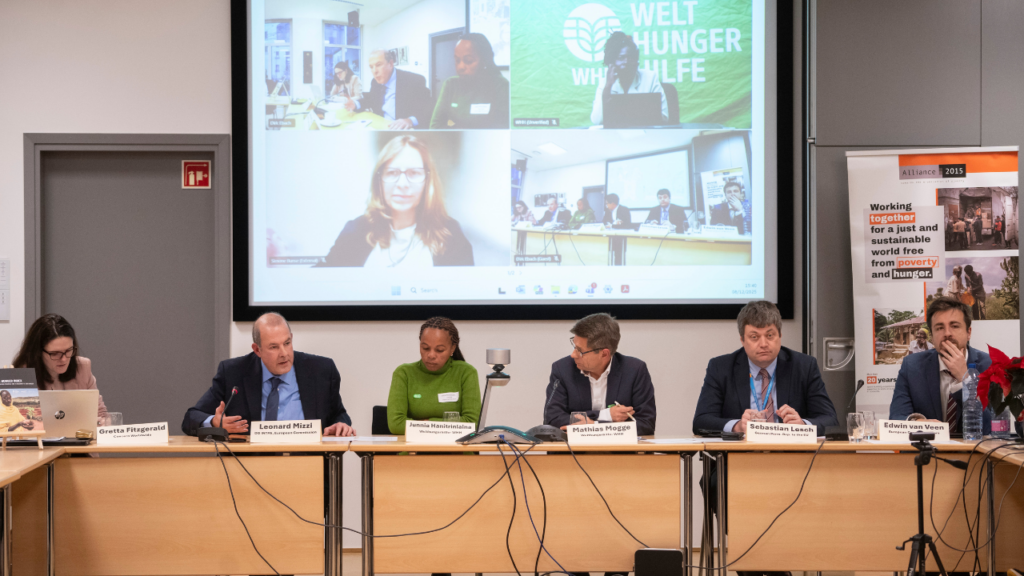
Moderated by Mathias Mogge, Secretary General and CEO of Welthungerhilfe, the panel brought together institutional, practitioner, and country-level perspectives.
The European Court of Auditors: Targeting and Sustainability Must Improve
Edwin van Veen, Auditor and lead author of the Court of Auditors’ Special Report Commission support to fight hunger in sub-Saharan Africa, presented findings from EU-funded projects across six African countries (Ethiopia, Kenya, Zambia, Chad, Niger and South Sudan). The audit identified recurring weaknesses:
- Targeting – Projects were not always directed toward those with the greatest needs, and root causes are not systematically tackled.
- Relevance – Interventions did not systematically involve local communities from their inception.
- Monitoring – Oversight systems were insufficient.
- Sustainability – Short project cycles undermined long-term results, and the humanitarian-development-peace nexus remains it its early implementation stage.
To address these gaps, the European Court of Auditors issued key recommendations to the European Commission, that were fully endorsed.
Madagascar: Living the Reality of Alarming Hunger
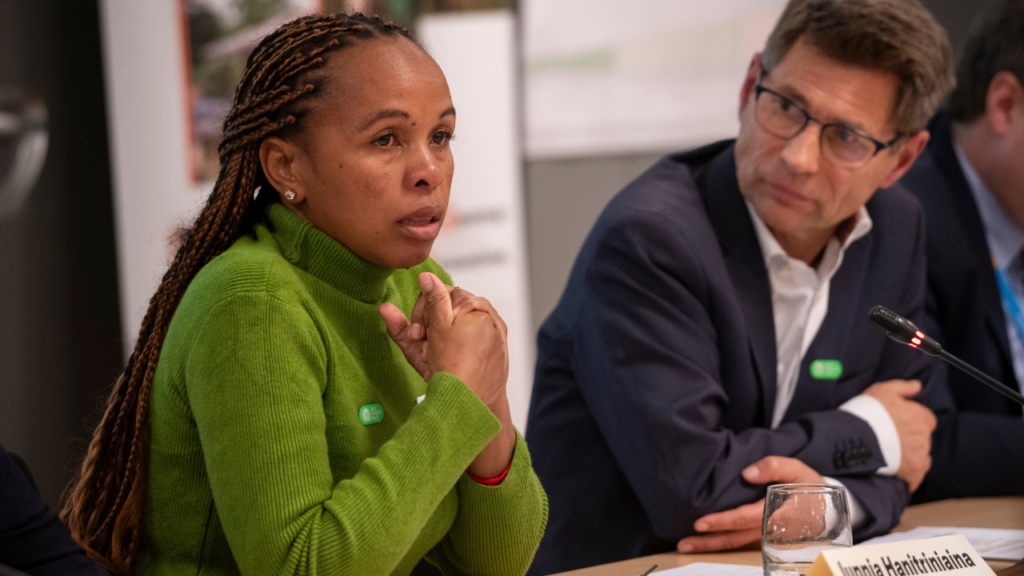
Speaking from her experience in the field, Junnia Hanitriniaina, WHH Project Manager in Madagascar, described with emotion the drivers behind her country’s alarming GHI score. She detailed a complex web of drivers: repeated climate shocks—including cyclones, floods occurring up to four times a year, droughts – and the lasting effects of COVID-19, combined with deep-rooted poverty, rising inflation, inadequate food and nutrition practices, seasonal food insecurity, heavy dependence on food imports and hampered access to land ownership, especially for women.
Hanitriniaina stressed that while the needs are immense, change is possible. She highlighted encouraging improvements already seen through the PROSAR project, demonstrating that long-term, community-centred interventions can make a measurable difference. In her view, the role of organisations like WHH and Alliance2015 is to accompany communities on their path to resilience, ensuring that progress is not only achieved but sustained. She also emphasized that the right political priorities, like food security and tackling poverty, should be supported.
The European Commission: Commitments and Pathways Forward
Representing DG INTPA, Leonard Mizzi, Head of Unit for Sustainable Agri-Food Systems, reaffirmed the European Commission’s endorsement of all recommendations from the European Court of Auditors. He stressed that food security, nutrition, sustainability, and local engagement remain central EU objectives, even if they are no longer prominent on the current political agenda.
Acknowledging that Global Gateway projects do not prioritize hunger or malnutrition, Mizzi highlighted the need for smarter interinstitutional coordination across all areas (development, humanitarian, agriculture, climate, trade), stronger Team Europe approaches, and strategic engagement with the private sector—especially as ODA declines and the EU prepares for the next Multiannual Financial Framework. Civil society, he added, is a critical partner in ensuring interventions are locally grounded and sustainable.
Malawi: Rights-Based Approaches and Social Accountability
Tunsume Mwaibasa, Advocacy Advisor for WHH Malawi, explained how rights-based approaches and community accountability mechanisms improve State responsiveness and food security. She outlined the country’s pressing challenges: a stunting rate of 37% (alarming), 71% of the population living in poverty, and the impact of climate change on agricultural production, which exacerbates hunger and vulnerability. She called for stronger integration between community voices, national planning, and EU development cooperation, underscoring that hunger reduction is possible.
In his closing remarks, Mathias Mogge urged civil society organisations to use their voices and leverage their positions to make clear, evidence-based calls to policymakers, particularly on the importance of investing in nutrition and sustainable food systems. Sebastian Lesch reinforced this message, stressing that principled European leadership is needed now more than ever. Both speakers highlighted the urgency of breaking down silos—across sectors and institutions—and strengthening coordination to ensure that commitments translate into meaningful action on the ground.
Key Messages from the GHI Brussels Launch
- The right to food is universal and non-negotiable—and the EU has legal and moral obligations to uphold it.
- We know what works, and twenty years of evidence point to solutions that are proven, scalable, and community-driven.
- Progress is reversible—and the current combination of conflict, political disengagement, and funding cuts risks erasing decades of achievement.
Photo credits: Zacarias Garcia.
Read more about the GHI 2025 here.
