

As of Friday, 21 Nov. 11:00 AM, supposedly the last day of COP30, the texts put on the table in the wee hours of the morning – resulting from two days of closed-doors consultations between the Brazilian Presidency and Country Groups – seemed far from gathering consensus. At Friday’s stocktaking plenary session President Correia Do Lago thanked everyone and called for global solidarity in the face of the crisis (as the serious fire accident bursted the previous afternoon had reminded us all). The challenges were particularly significant: the exit of the US from the Paris Agreement and rumours about additional exits were threatening climate action, while extreme weather events continue to increase in frequency and impacts. The urgency of a coordinated way out of the climate crisis was before the world’s eyes.
The collective mobilization that took place globally in the preceding months paved the way for negotiators to engage in Belém and demonstrated that the UN climate regime needs to be strengthened—and that it has, in fact, achieved much more than many realize. Holding the conference in Belém was intended to show what accelerating implementation looks like in practice: by witnessing the local reality first-hand, delegates could better understand the development and climate challenges faced even by a middle-income country like Brazil, particularly in the Amazon region, which is heavily affected by extractive industries. These pressures compound poverty and inequality, contribute to rights abuses, and intensify environmental and climate damage.
COP30’s Threefold Objective and the Road to Consensus
COP30 had a three-fold objective: saving multilateralism through building consensus and moving action forward (thus overcoming 30 years of frustrations), connecting the UNFCCC process to people’s lives, and accelerating implementation. At that stocktaking plenary, the Presidency stated to be working towards a common outcome where nobody would be a “winner”. The considerable challenges of achieving consensus were known to everyone, as each delegation would face pressures back home; the host country was no exception, and even their priorities might not advance as they wished. The President called for unity within the Paris Agreement, saying they had tried hard to reduce the existing perception of divide and preserve the UN climate regime in a spirit of cooperation. He encouraged Parties to reach an agreed outcome and celebrate the ten years of the Paris Agreement.
Consultations with all delegations were thus reconvened to discuss the outcome texts. In the following hours, while closed doors negotiations went on – so-called “shuttle diplomacy”- civil society outside kept calling for a positive outcome based on justice, with more finance for adaptation for developing countries, with a roadmap to phase out fossil fuels in line with a just, orderly and equitable transition; hopes were high also for the effective establishment of a ‘Belém Action Mechanism’ to govern that transition. In sum, for civil society left outside to wait, justice would be the critical outcome of the entire deal.
Alliance2015 at COP30
Alliance2015 participated in COP30, bringing its vision for a world without poverty, hunger and oppression, where resilient and empowered peoples thrive in a healthy and environmentally sound planet, and progress towards participation, inclusion and equality.
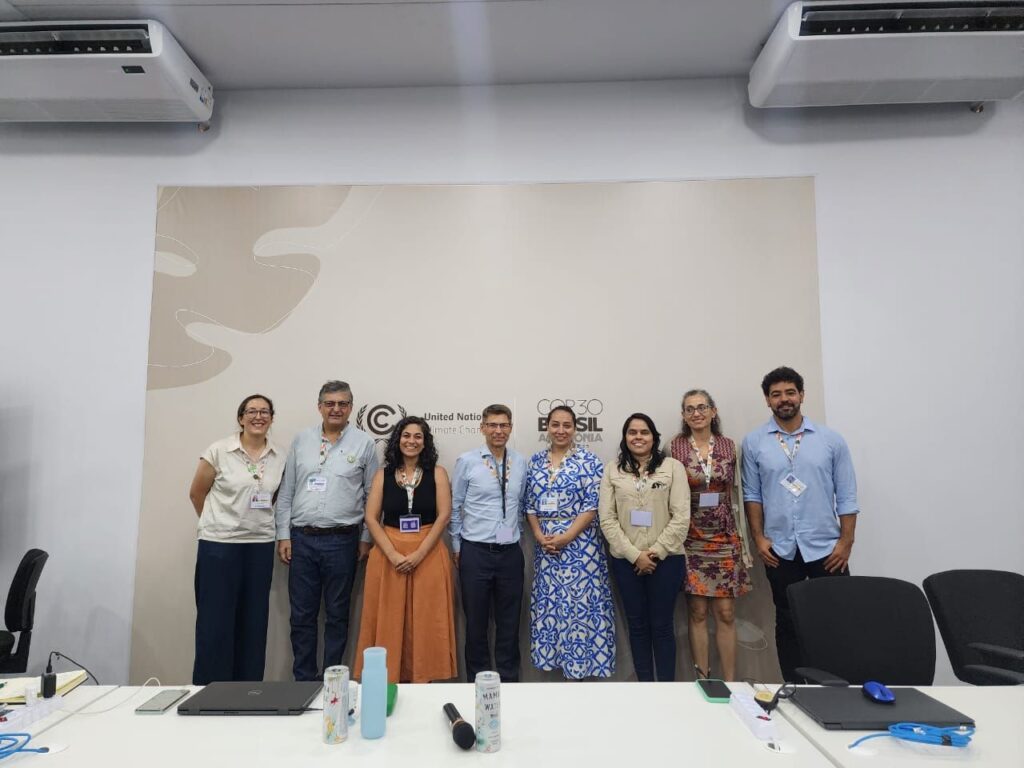
Under this vision, a few negotiating outcomes were crucial:
1. Adaptation
Expectations and Calls from the Global South
Adaptation was expectedto besignificantly promoted through an agreed Global Goal including finance and support, with defined indicators and tracking mechanisms to ensure progress. The Global South was calling for a new Adaptation Finance target, tripling from 2025 to 2030, and public funds in the form of grants, especially supportive of local initiatives including in fragile and conflict-affected contexts (FCAS), to prevent climate-affected and already heavily indebted countries from being further destabilised by loan-based finance. Yet, while the outcome recognized the urgent need for grant-based resources and highly concessional finance, and ultimately included a commitment to triple Adaptation Finance, it did not set a certain baseline nor clarified responsibilities for developed countries, postponing delivery to 2035. Along with other blocking developed countries, the EU declined its financing obligations under the Paris Agreement (also treated as a bargaining chip versus a global decarbonization roadmap, which was not agreed upon). These discussions however brought to light the widespread need for better quality Adaptation Finance, which should remain on the table at future negotiations in our collective effort to achieve climate justice.
2. Global Goal on Adaptation Indicators
Concerns Raised by Parties
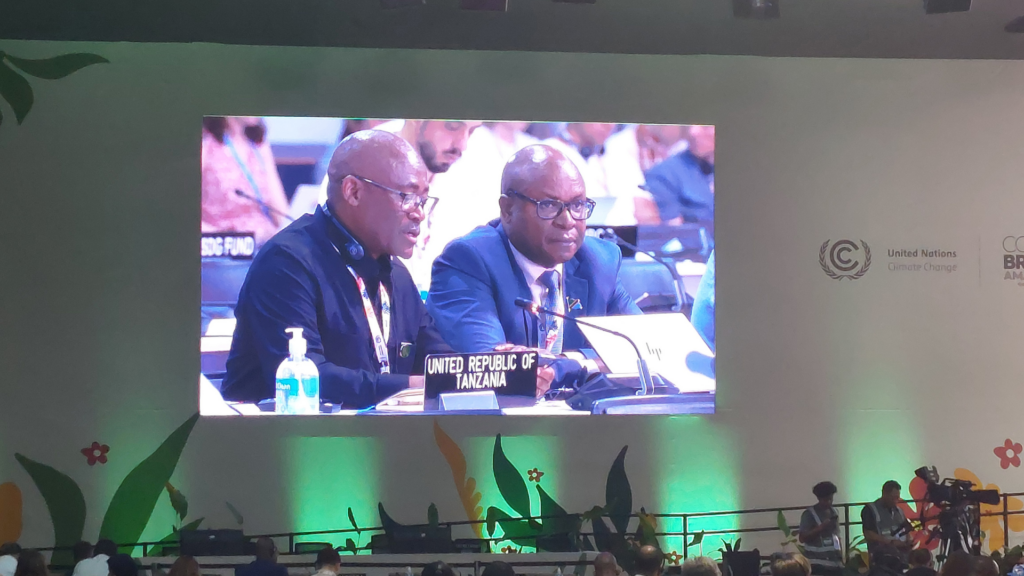
On the Global Goal on Adaptation, many Parties (including the EU and Least Developed Countries) expressed dissatisfaction with the chosen indicators. Sierra Leone, in particular, said indicators served to show where climate action stands, what was done and what needs to be done, and that many experts had worked on them throughout the year. The list adopted at COP30 was a different one and told another story, leaving Country Parties with unclear, unmeasurable and unfeasible indicators. They asked what success would look like in the future, and how governments would be accountable to their people. They underlined their continued engagement, however, “because for us this is not a technical issue, it is about our survival”. The President therefore requested that further refinement and guidance work would continue at the next session in June 2026, taking into account all statements and reservations made by Parties. He also requested the UNFCCC Secretariat to prepare best practices to guide the process in a way to ensure transparency, inclusivity, predictability and legitimacy as absolute priority.
3. Just Transition
Why Just Transition Was Central
The only major advancement was made on Just Transition, an objective introduced by the Paris Agreement. However, while being on every country’s agenda, the pathways to achieve it were very diverse. All Parties wanted transition to be just and leave none behind. Inclusivity and legitimacy were key to ensuring fair policies that would not bear negative impacts on workers and on communities impacted by new extractive patterns for critical minerals and renewable energy plants. Upholding human rights, gender equity, labor rights was seen as a centerpiece of Just Transition. For civil society, climate change and addressing poverty and inequality could not be solved separately; Just Transition meant tackling them together, as an integrated program across sectors, transforming economies in ways that would protect workers and people, ensure public services and livelihoods (energy, transport, food, health, etc.), ground sustainable and just solutions on effective social dialogue and participation of all stakeholders. Just Transition had to be driven and decided locally and at country levels, with support and cooperation for Global South countries. Just Transition needed peace, and having local and indigenous communities as key actors, not victims. For all this to realize, a new institutional arrangement – the ‘Belém Action Mechanism’ – was necessary to address current fragmentation and inadequacy of global efforts, ensure coordination and coherence, knowledge-sharing and replication, unlock financial and technical support, bring stakeholders together.
In the view of some Parties, like the EU, accelerated transition away from fossil fuel towards net-zero economy, doubling efforts towards renewable energies, cooperation on carbon market mechanisms and private-public sectors linkages would be essential elements, with no Mechanism but an Action Plan to ensure enhanced capacities, knowledge and inclusion of workers, women and the youth. Others, like Spain, argued decarbonization and prosperity could go hand in hand, and Just Transition pathways had to have human rights, gender equality, labour rights and socio-economic opportunities at their core. For others, like India, Just Transition would not end with energy transition, but involve social economy and justice, strengthened resilience, enhanced capacity, poverty eradication and social protection. In pursuit of global equity, the specific conditions of developing countries and their need for accessible and adequate Means of Implementation had to be considered. India, like the G77 Group, was joining the call for a Just Transition Mechanism. Decent work, including for informal workers, and reliable access to energy for everyone were also called for by Guatemala, along with a Mechanism ensuring synergies among different national pathways. For major fossil-reliant economies like the Arab Group, Just Transition had to be nationally defined, grounded in equity and realize poverty eradication, but without interfering with national energy systems. The final decision lived up to our expectations, including a Just Transition Mechanisms and strong language about human rights and meaningful participation involving all relevant stakeholders, including workers, people in vulnerable situations, Indigenous Peoples, local communities, migrants and internally displaced persons, people of African descent, women, children, youth, the elderly and persons with disabilities.
4. Agriculture and Food Systems
Shifting Away From Industrial Agriculture Models
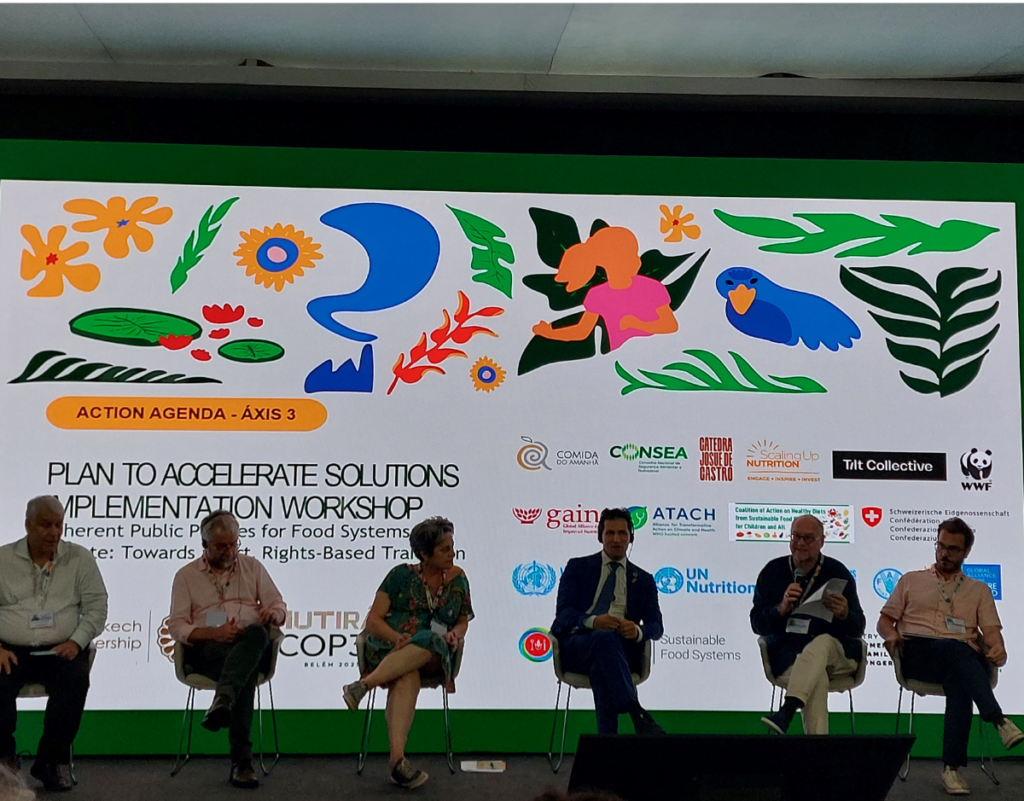
Agriculture and Food Systems were not negotiated at COP30 but featured as an objective of the Presidency Action Agenda (Axis 3: Climate, Food Systems and Agriculture), were discussed in Thematic Days (19-20 Nov.), while rural economy actors, smallholder farmers, and food production were included in the Just Transition Decision. On the eve of COP30, world leaders signed the Belém Declaration on Hunger, Poverty, and People-Centred Climate Action. As part of the Action Agenda, the workshop “Coherent Public Policies for Food Systems and Climate: towards a Just, Rights-based Transition” made the case for 1) all Nationally Determined Contributions (NDCs) to include Food Systems in order to ensure equitable and just production, consumption and tackling food loss and waste; 2) putting Food Systems and Agriculture at the core of GGA indicators; 3) increasing climate finance for Food and Agriculture, noting that while harmful practices are heavily subsidized, family farming only receives 0,36% of the adaptation finance required; 4) addressing the Climate, Land and Biodiversity agendas altogether; 5) adopting a justice approach by ensuring democratic and participatory governance and choosing solutions starting from local territories, despite all the challenges, while countering false solutions and exclusion; 6) advancing the Food Systems, Agriculture and Health agenda altogether to achieve Nutrition. And while ensuring convergency between Climate, SDGs and Food Systems targets was recognized as a challenge, initiatives like the UN Food Systems Coordination Hub and a Blueprint have been launched to foster coherence, identify gaps, needed interventions and monitoring. It was recognized that not all innovations are improvements, and that local traditions valuing the connection between humans and nature exist, yet do not receive support. Not only is transition to low-carbon agriculture needed, but a real change of paradigm, shifting away from agriculture models that separate humans and their health from nature.
A powerful Amazonian rain introduced the final stages of the Closing session. Among all expressions of gratitude and ceremonial passing the baton to the next Presidencies, the promise of Ethiopia, who will be hosting the UN Climate Conference in 2027, stood out to ensure COP32 will not just be a conference, but “a covenant with our planet, our children, our future”.
