

2026 Global Hunger Index
Global hunger is rising again after almost two decades of progress. The 2026 Global Hunger Index (GHI) warns that wars, climate shocks and economic crises are reversing efforts to end hunger, putting food security and the goal of Zero Hunger further at risk.
The report’s message is clear: food security must be recognised as an essential part of peace and security. Conflict destroys livelihoods, disrupts food systems and restricts access to essential supplies, while hunger and food insecurity can further fuel instability. These effects extend far beyond the front lines, threatening communities already struggling with poverty and rising living costs.
Published under the theme No Security Without Food Security, the 2026 GHI calls for a broader understanding of security—one that recognises access to adequate food as fundamental to human well-being, peace and stability.
Global hunger is rising again
The 2026 GHI paints a concerning picture of the global fight against hunger. An estimated 645 million people worldwide are going hungry, while hunger has worsened in 32 countries. Meanwhile, 57 countries are unlikely to achieve even low levels of hunger by 2030, highlighting the growing gap between current progress and the Sustainable Development Goal of Zero Hunger.
The findings underline the need for urgent and sustained action. Without stronger investment and political commitment, overlapping crises risk reversing previous gains and leaving millions more people exposed to food insecurity.
Conflict and insecurity threaten food systems
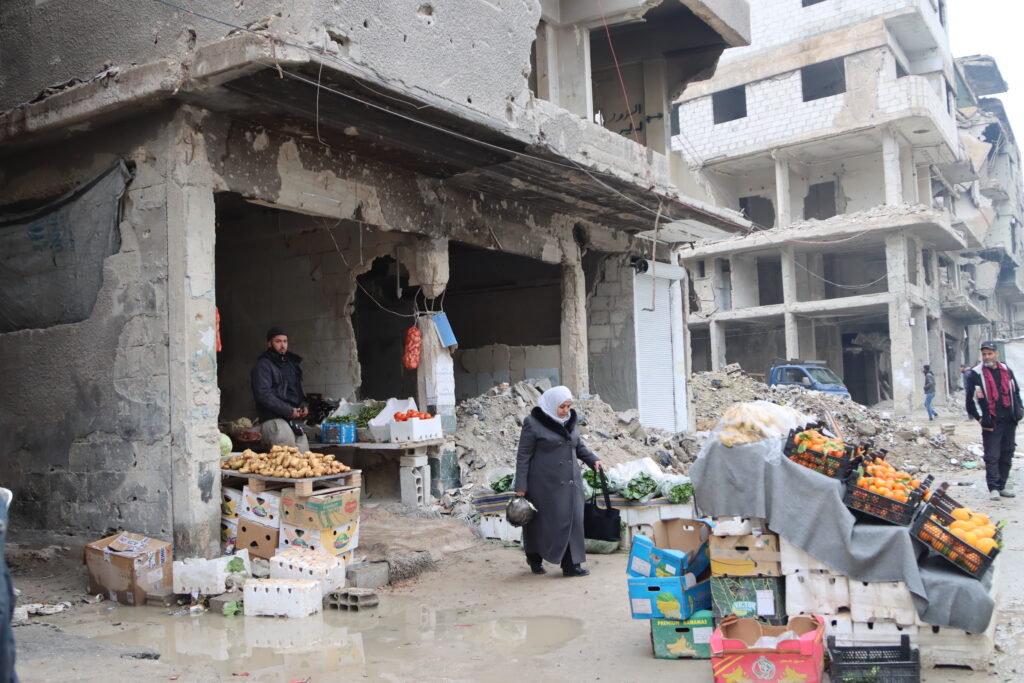
Conflict remains a major driver of hunger, but its effects reach far beyond the countries directly affected by war. Disruptions to shipping routes and international trade, alongside restrictions on food exports, can drive up the costs of fuel, transport and agricultural inputs, including fertilisers. These increases put additional pressure on food prices and make basic supplies increasingly unaffordable for families already facing economic hardship.
The report highlights the wider consequences of current conflicts. Disruptions to shipping through the Strait of Hormuz and escalating tensions around the Bab el-Mandeb Strait are contributing to concerns over transport and fertiliser costs. Meanwhile, Russia’s war against Ukraine and restrictions on grain exports through the Black Sea threaten further increases in wheat prices.
For communities across the Global South, where many households have limited resources to absorb price shocks, these developments can further undermine access to food and threaten already fragile livelihoods.
The report also highlights the devastating consequences of restricted humanitarian access in conflict zones. When aid cannot reach people in need, the consequences for their survival can be severe. Protecting civilians, upholding international humanitarian law and ensuring humanitarian organisations can operate are therefore essential to addressing hunger in crisis settings.

Sub-Saharan Africa remains particularly affected
Regional disparities remain stark. Sub-Saharan Africa continues to face some of the most severe levels of hunger, with seven of the eight countries classified as having alarming hunger levels located in the region. Somalia records the highest GHI score, while the effects of El Niño threaten to worsen food insecurity further.
These challenges underline the importance of strengthening the resilience of food systems and supporting communities facing the combined effects of conflict, climate pressures and economic instability. Long-term investment in sustainable agriculture, nutrition, healthcare, education and sanitation can help address the underlying causes of hunger and reduce vulnerability to future crises.
Yet progress remains possible. Countries such as Uganda and Nepal have reduced hunger through political stability and sustained investment in essential services and nutrition. Their experiences demonstrate the importance of consistent policies and long-term commitment to improving people’s living conditions.
Making food security central to peace and security
The 2026 GHI calls for a shift in how governments approach security. Military and geopolitical considerations cannot be separated from the conditions that allow people and communities to live safely and with dignity. Food security is fundamental to peace and stability, and neglecting it risks deepening humanitarian crises and contributing to further instability.
The report calls for reliable, long-term investment in sustainable agriculture, resilient food systems and social protection, alongside stronger diplomatic efforts to resolve conflicts and uphold international humanitarian law.
These priorities are particularly urgent as development cooperation and humanitarian assistance face funding pressures. Reducing investment in food security and crisis preparedness today risks creating greater humanitarian needs and instability in the future. Preventing hunger requires sustained resources, effective crisis preparedness and political action that addresses both immediate needs and their underlying causes.
Achieving Zero Hunger will depend on recognising food security not as a separate development concern, but as a central element of international cooperation, conflict prevention and lasting peace.
You can find the full 2026 Global Hunger Index report, No Security Without Food Security, here.

About the GHI
The Global Hunger Index is a peer-reviewed annual report and one of the world’s most comprehensive tools for measuring and tracking hunger at global, regional and national levels. Published jointly by Welthungerhilfe, the Institute for International Law of Peace and Armed Conflict (IFHV) at Ruhr University Bochum, and Helvetas, the GHI aims to raise awareness of hunger, track progress and encourage action to reduce hunger worldwide.
The GHI measures hunger using four key indicators:
- Undernourishment: the share of the population with insufficient caloric intake.
- Child stunting: the share of children under five with low height for their age, reflecting chronic undernutrition.
- Child wasting: the share of children under five with low weight for their height, reflecting acute malnutrition.
- Child mortality: the share of children who die before their fifth birthday, partly reflecting the consequences of inadequate nutrition and unhealthy environments.
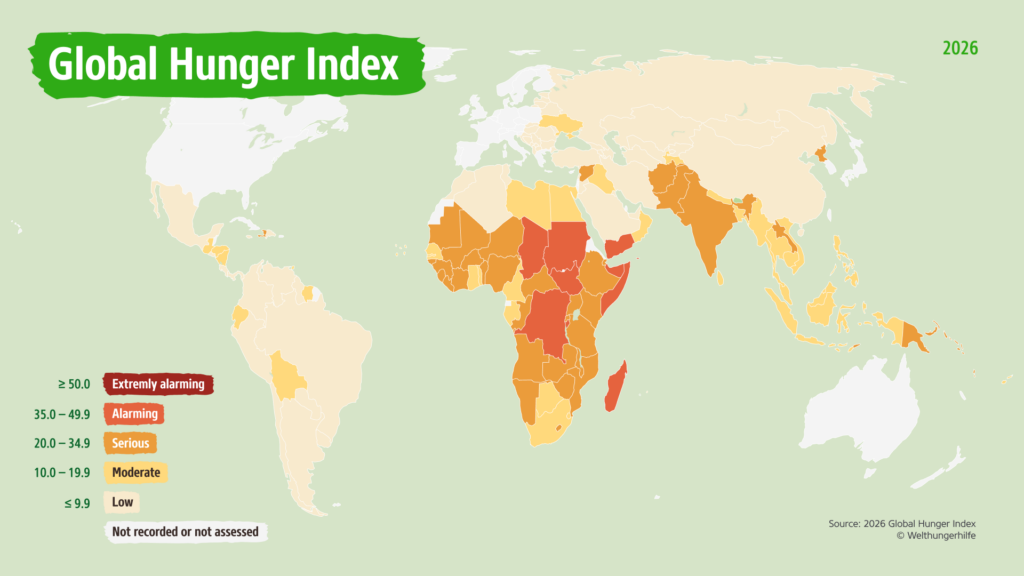
Countries are scored on a 100-point scale, where zero represents no hunger and 100 represents the worst possible hunger level. The severity categories are:
- Extremely alarming: 50 or higher.
- Alarming: 35–49.9.
- Serious: 20–34.9.
- Moderate: 10–19.9.
- Low: 9.9 or lower.
Cover Photo: On market day in Ethiopia’s Borena Zone, beef cattle
farmer Dama Boru, 53, joins traders and other farmers bargaining
over livestock. At markets like this, wider shocks become visible:
drought, insecurity, and rising costs can affect both the value
of livestock and the price families pay for food. Mahad Usman/Helvetas,
Ethiopia 2025.
